The MAM Business Model Is Broken. Here’s What Replaces It.
I’ve spent decades in this industry, so let me say what a lot of vendors would rather I didn’t. The biggest problem in media asset management isn't technology. It’s the business model.
Talk to anyone who has bought a MAM before, and you’ll hear the same thing. They’re wary. Not of the technology, but of the industry. Commercial surprises have caught them that they never saw coming. They’ve watched a project meant to take weeks swallow most of a year and a big slice of the budget before anyone got real value from it. Many would rather limp along with shared drives than go through that again. That wariness is the industry’s own doing, and it’s the biggest barrier to growth in this market.
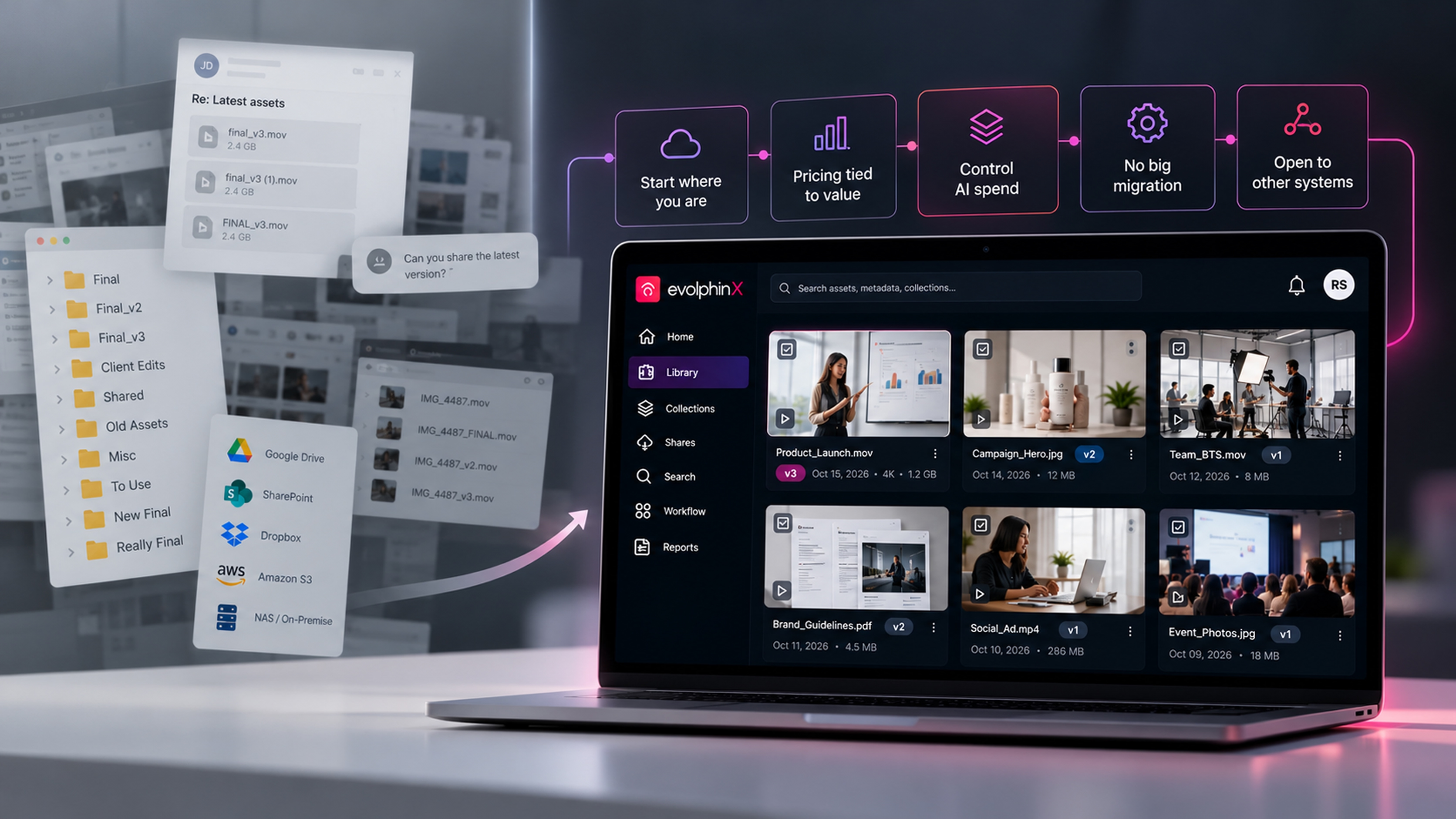
The short answer: over the next five years, the MAM business models that win will replace per-seat pricing with pricing tied to value, replace big upfront commitments with platforms you can start where you are and grow, replace mass migration with indexing content where it already lives, put AI spend under the customer’s control, and open the platform to other business systems. Each of those shifts answers one of the two reasons buyers distrust this industry today: surprises on the invoice, and deployments that cost too much and take too long.
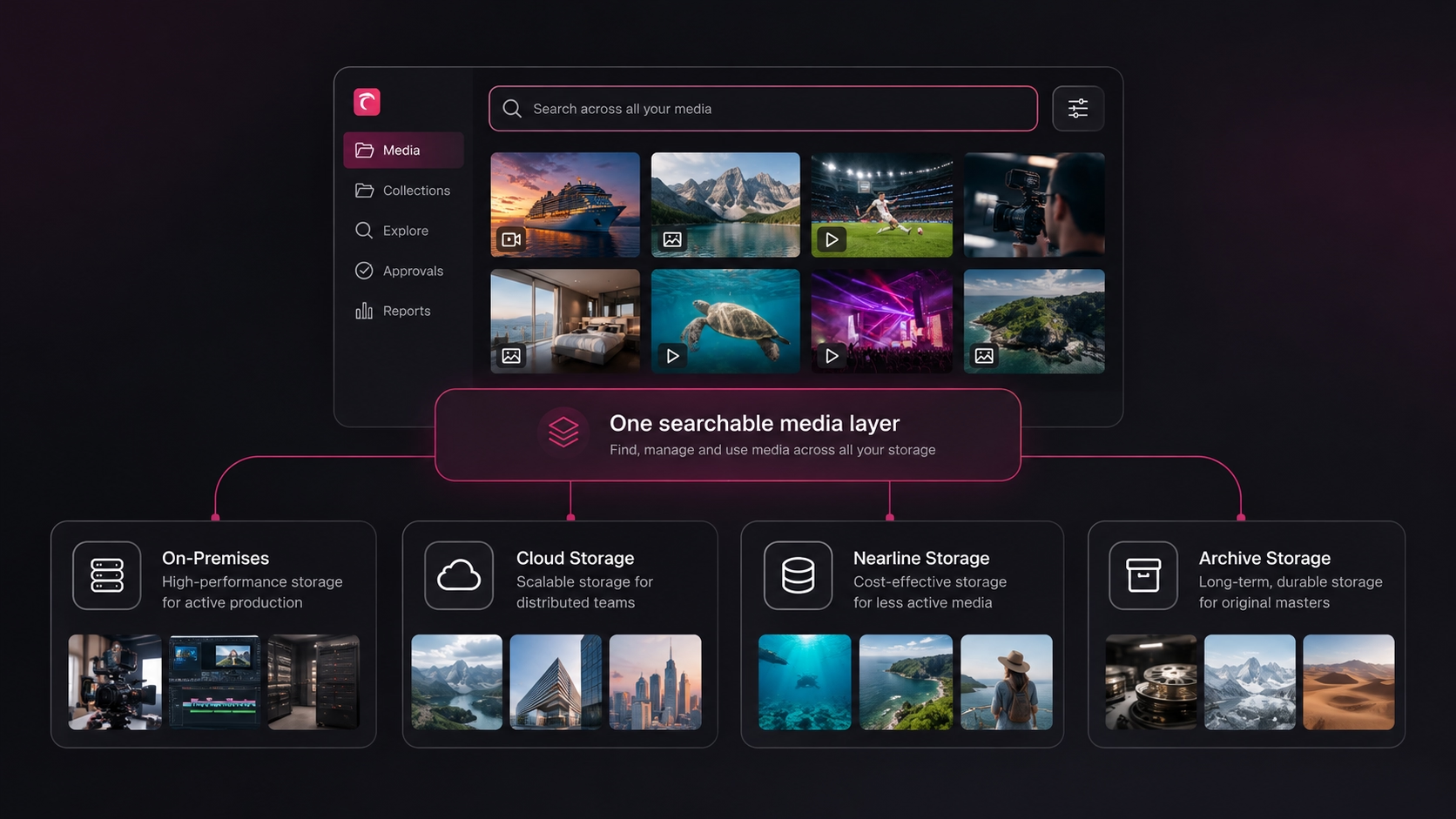
The old model vs. what replaces it
A model designed for the vendor
The market itself is healthy. MarketsandMarkets puts digital asset management at $6.23 billion in 2025, growing to $14.51 billion by 2031. But growth hides the problem. A lot of customers aren’t unhappy because their MAM is missing features. They’re unhappy because the commercial relationship was built to work against them.
Start with renewals. Independent procurement benchmarks published this year show smaller customers of one of the best-known vendors in this space absorbing renewal increases of around 23% year over year. Same team. Same usage. Same assets. Run that twice on a $50,000 contract and it becomes roughly $61,600 in year two and $75,900 in year three. That’s more than $37,000 above the price the customer signed, and nothing about their business changed to earn it. When a vendor’s owners need margin growth, renewal is where they go looking for it.
Then there’s how pricing is hidden. Most of the large platforms won’t tell you what you’ll pay until you’ve sat through demos, discovery calls and a custom quote. The real cost of year one usually arrives later, once migration, integrations and training are added. One enterprise DAM practitioner advises budgeting 1.5 to 2 times the licence cost in year one. You find that out late in procurement, which is exactly when walking away is hardest. Include these costs when defining your media asset management requirements, so you compare the full commitment rather than the licence price alone.
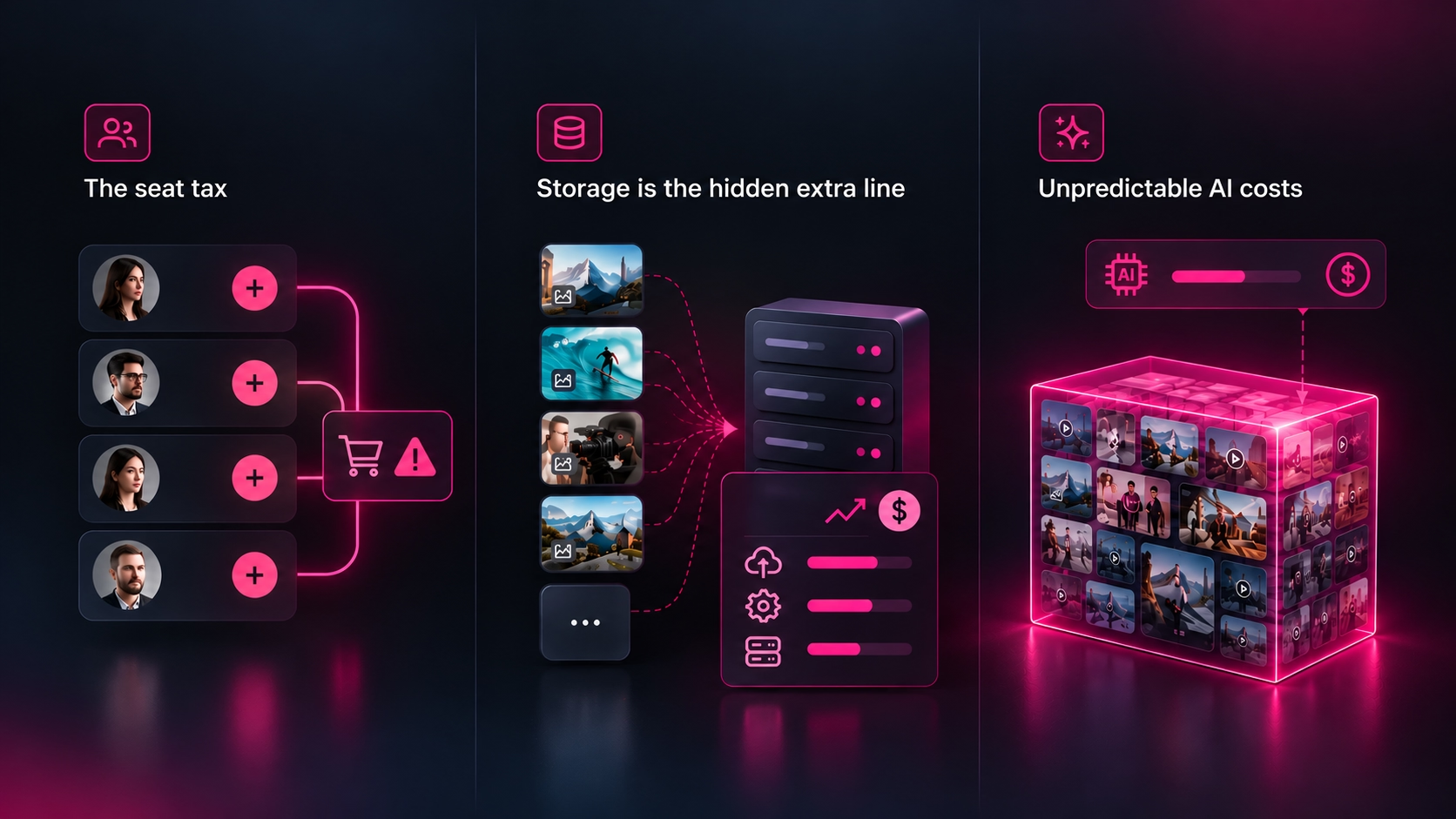
Then the seat tax. Per-user pricing penalises the one thing every customer wants, which is more people using the system. Add a freelance editor, an agency partner or a client who needs to approve a cut, and you’ve triggered a procurement event. So teams ration licences. People who should be in the system go back to shared drives and email attachments. The easier route stops being the governed route, adoption falls, and the platform meant to connect people ends up keeping them apart.
Storage is often the hidden extra line. Even vendors who let you keep your own storage frequently leave the cost of moving, processing and serving that content entirely to you, outside their bill and outside their accountability.
And now there’s AI. Too many vendors bolted it on as a premium add-on, and most of them index everything or nothing. So you pay to process your entire archive, including decades of footage nobody will search again, just to make this year’s content findable. Customers are discovering AI costs they never had a chance to plan for.
A deployment model that kills adoption
The traditional approach starts with a demand: move all your content into the vendor’s world before you see any value. In practice that means mass ingest, re-indexing everything and pushing terabytes across networks that weren’t built for it. File permissions break. Content goes missing. Duplicates multiply. Old formats refuse to cooperate. Log files and junk get ingested alongside the assets that matter. Every one of those problems adds time, cost and support tickets. A better media asset migration plan starts by deciding what actually needs to move.
The same practitioner describes six to twelve months from contract signing to confident, organisation-wide adoption for a mid-size organisation as realistic. When implementation is a revenue line for the vendor, there’s little reason to make it shorter.
I’ve watched what happens next too many times. The team is excited on signing day. By go-live, months later, that excitement has gone. The champion has moved on, the editors have built workarounds, and the new system arrives as one more thing to learn. People adopt technology that complements what they already do, and they rebel against anything that creates more work. A six-month deployment is six months of more work before anyone sees a benefit. These media asset management best practices put adoption and everyday workflows at the centre of implementation.
Lock-in finishes the job. Multi-year contracts and auto-renewals keep customers who would otherwise leave. That protects the vendor’s revenue. It does nothing for the customer, and it removes the one pressure that keeps a vendor honest.
Five shifts that will define the next five years
- From seats to value. Pricing will follow the outcomes a platform delivers, not how many people touch it. Vendors who charge for headcount are charging customers for success.
- From all-in to start where you are. Buyers won’t make a large capital commitment just to find out whether something works. They’ll begin with the capability they need now and grow it as the value is proven.
- From migration to index in place. Content will stay where it lives, and the intelligence will come to it. The question will shift from “how do we move everything?” to “why would we?”
- From surprise to predictable. AI spend will be something customers choose, scope and control, not something that happens to them.
- From closed product to open platform. A MAM will be the media backbone for websites, ecommerce and partner applications, not a walled destination.
How we built Evolphin X for that future
We learned some of this the hard way. Our previous platform grew into one tangled block of code where a fix in one place could break something elsewhere. That cost us, and it cost our customers. So we rebuilt from the ground up.
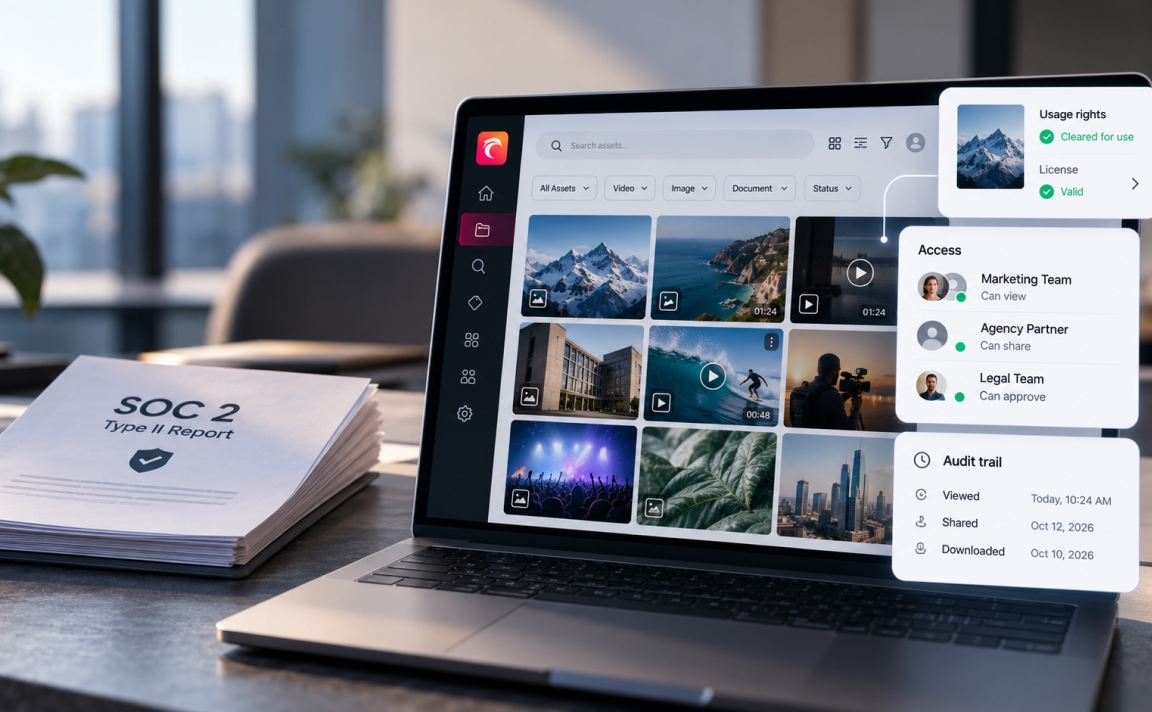
Evolphin X runs on Core, the engine underneath everything.Core owns what has to be right every time: security and access control, storage and data integrity, and AI integration. It’s built once and trusted everywhere. No engine, no car. No Core, no MAM.
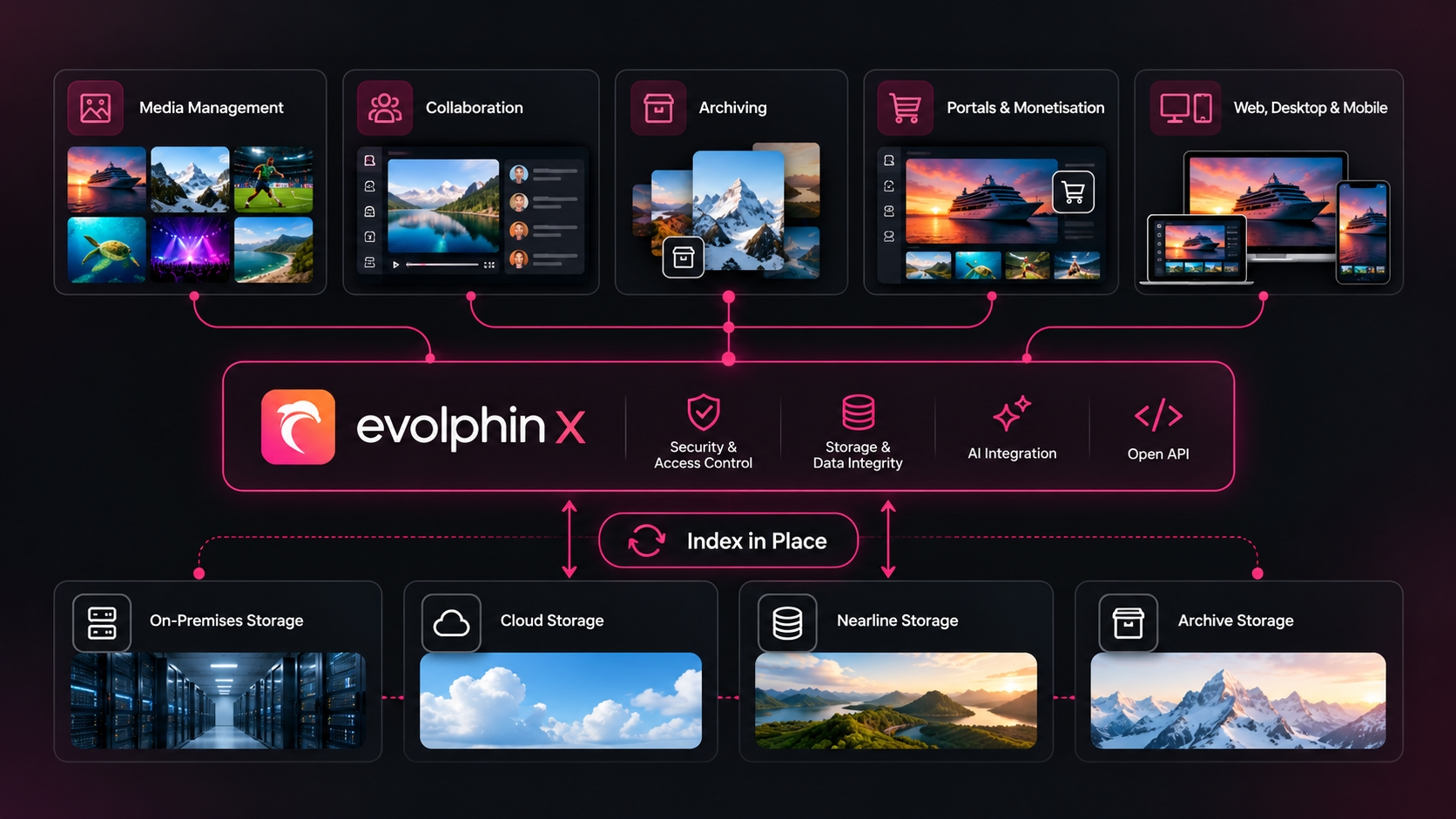
Core isn’t an entry-level tier. It’s the backbone that lets a departmental system grow into a full enterprise platform without being rebuilt or migrated again. For some customers, Core on its own meets every requirement they have.
Modules expand what’s possible on top of it. Collaboration gives internal teams and external partners secure access to content, with portals that can also help you monetise it. Archiving and others follow, and you use them on desktop, web or mobile. Over the next six months we’re also changing how you buy them. You’ll be able to choose the modules you need and provision them yourself from our website, with each one priced on the business value it delivers and billed on demand. No large upfront investment and no procurement marathon. If a module isn’t earning its place, you won’t be paying for it.
That also changes how we release. We don’t ship big version upgrades you have to plan around. Each new module is its own announcement, and the platform grows the way a community does.
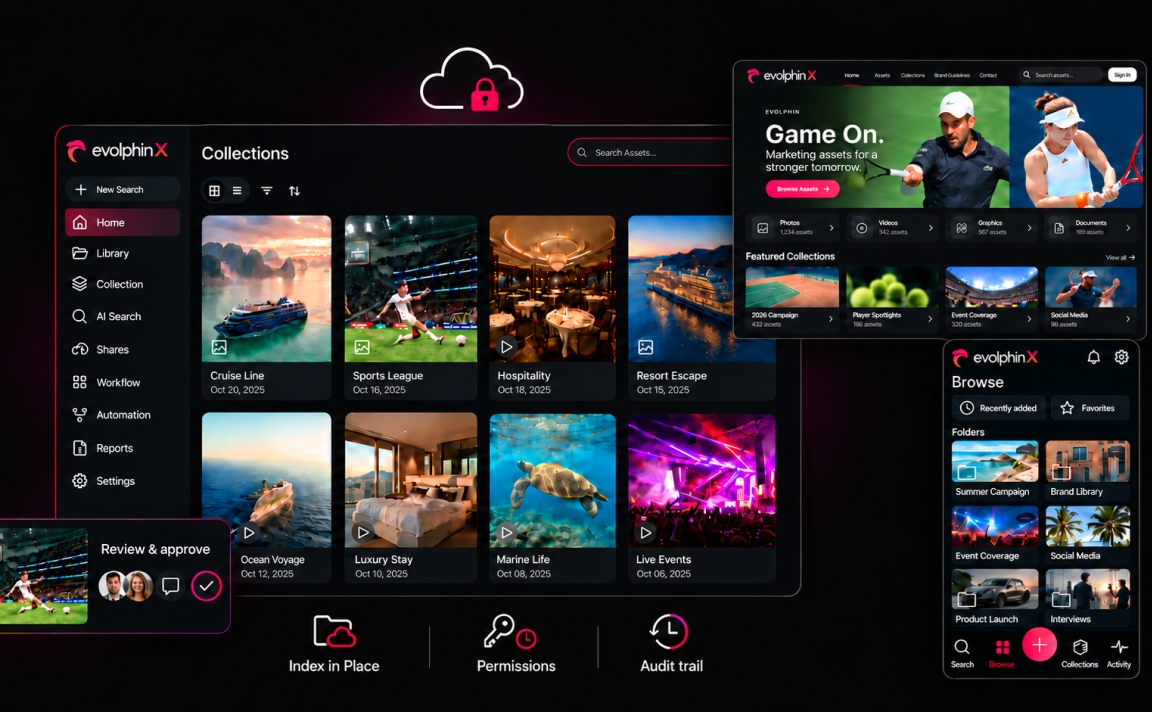
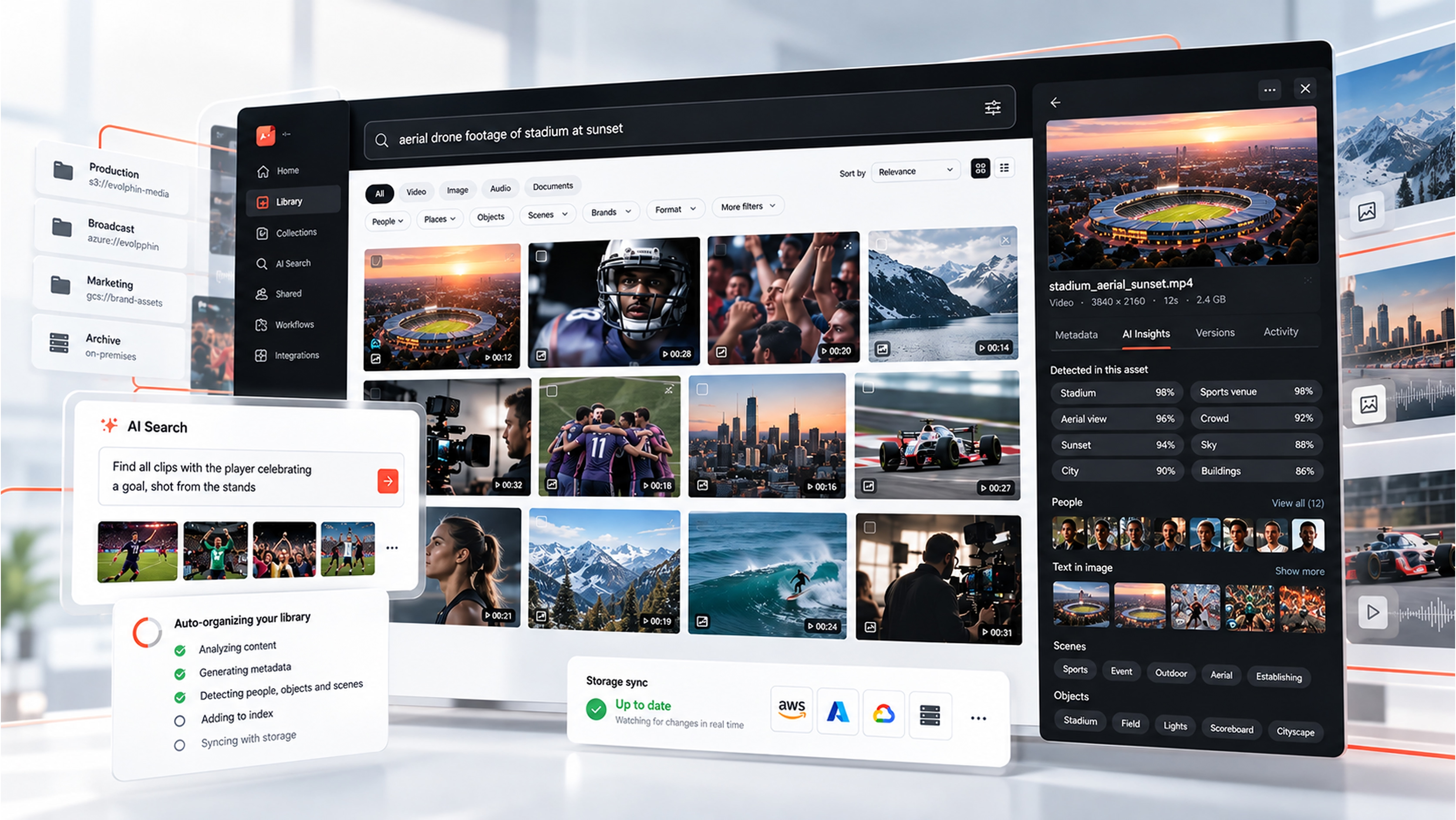
With Index in Place, your content stays in your own storage, whether that’s cloud, on-premises or both. Evolphin X indexes it with AI, keeps the index in our database, and watches your storage so that when files are added, moved or changed, the index updates in real time. There’s no mass migration standing between you and your first search.
You also decide what the AI processes: a single file, a file type, a project or any subset of your library. You pay for intelligence where it creates value, not for running AI over everything you’ve ever stored.
And Core is open. Everything connects through one structured API, so other applications can plug straight in, and Core can power media for your website, your ecommerce platform or your other business systems.
Earn it every year
This industry has spent years teaching buyers to expect surprises on the invoice and delays on the project plan. Winning back their trust won’t come from a better demo. It will come from a business model with no surprises in it and a platform that delivers value early, not in month six.
The vendors who win the next five years will be the ones who earn their renewal rather than engineer it. That’s the standard we hold ourselves to. We want to be the platform our customers would genuinely be lost without, because it keeps delivering, not because a contract says they can’t leave.
If you’re facing a renewal soon, try one thing. Ask your vendor to put your year-three price in writing today. Their answer will tell you everything about the model you’re in.
Then let’s talk.