Behind a Global Cruise Line's Ship-to-Shore Media Overhaul
When your content is captured in the middle of the ocean and reviewed across three continents, "where's that file?" is a daily question. Here's how one cruise line answered it and built the foundation for what's next, with Evolphin.
30%
Faster review cycles
350TB
of media indexed
2,400
hours reclaimed
<6months
Onboarding completed
"Before we switched to Evolphin, the biggest challenge was just finding the file across multiple hard disks and dropboxes and then making sure it was the right version. Now the media library does that part for us, regardless of where the content is stored and where our teammates are located - on a ship, at home, on an assignment or right here in the office."
Cruise lines generate more original video content than almost any other travel category. This customer was no exception, managing several hundred terabytes of media, growing weekly, across ship features, destination campaigns, onboard entertainment, safety, crew training, drone footage, and user-generated content.
That content had to move fast - from a crew filming at sea, to editors on shore, to the independent travel agents who drive most cruise bookings and to the marketing hubs built to serve them.
But that content lived everywhere at once, scattered across ship, shoreside, and agency teams, spread across servers, external drives shuttled between locations, and cloud folders with no shared structure. Finding the right approved clip meant remembering where it was, or having access to whichever drive it happened to be sitting on that week. With no single source of truth, teams couldn't trust that what they found was current, approved, or even the right version, in fact, the tools meant to hold it all together were simply not up to the task.
Challenges
Finding the right asset was harder than creating it:
For marketing and creative teams, the content almost always existed somewhere: the footage, the campaign masters, the perfect ten seconds inside a two-hour capture. All of it existed; exactly where it lived was anyone's guess. With no governing record of what existed or where, the wrong drives, for example, were often shipped between locations, costing days in transit and reshipping, and duplicate files piled up as a direct result of that missing governance. The net result: producers lost hours working with the wrong assets, or hunting for the right ones, while the media and archive teams, the closest thing to a system of record, were relegated to a full-time search desk function.
Huge files, scattered storage, and an editor's machine that can't keep up:
Video files are typically huge, and without a structured proxy workflow, remote work was nearly impossible; editors and freelancers simply couldn't access content from wherever they were. That's a serious gap for a cruise line, where crews shoot at sea, freelancers shoot on location, and editors need the flexibility to work from anywhere. Remote capability isn't a nice-to-have here; it's the most important workflow of all.
Getting content to partners and co-ordinating edits is its own full-time job
This is the world of the producers and the trade marketing team. Missing from the workflow was the ability to collaborate with key stakeholders in real time. Every travel agency and creative partner must receive approved, co-branded assets; therefore, doing this effectively was nearly impossible without collaboration tools that enabled people to collaborate and interact securely in real time. Email, Teams and other such productivity tools are not designed or intended to facilitate real-time collaboration.
Talk to us
Don't let traditional methods slow down your media workflows
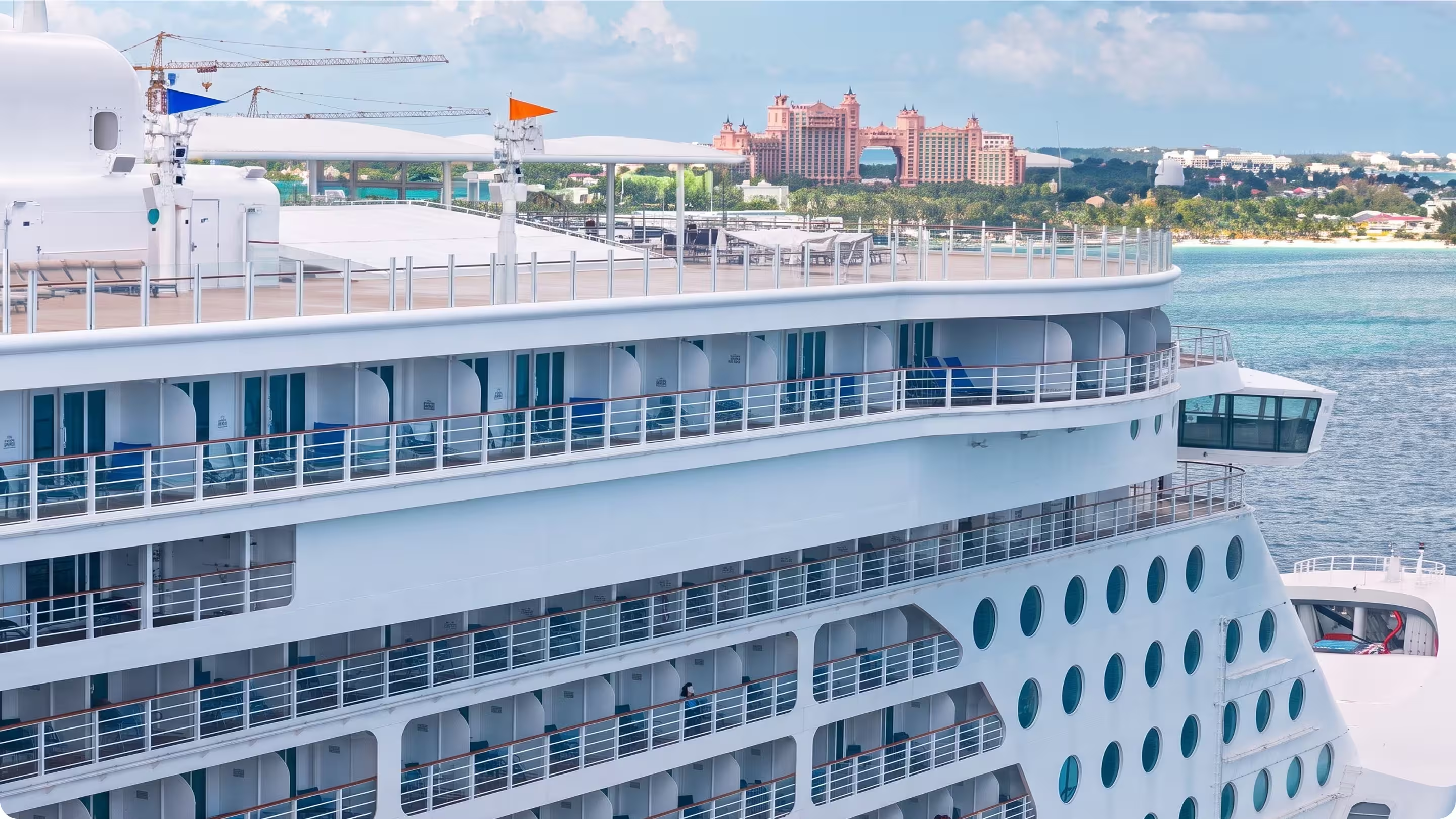
The customer is a global cruise line running more than 15 ships to hundreds of ports of call, from the Caribbean and the Bahamas to Alaska and the Mediterranean, carrying millions of guests each year. Content is central to their operational success. Producing content was never the hard part. The real challenge was governing it: storage, security, access control, and then making sure that creative teams and external agencies had the tools and processes necessary to ensure brand compliance.
15+
ships in the fleet
100+
ports of call
300+ TB
in the media library
Millions
of guests a year
Solution
One library, and one search across all of their storage
In the first phase, we cleaned (duplicates were deleted, incorrect file names were resolved, and files were stored in structured locations) and centralized all of their data, providing a central point for everyone in the workflow to search, ingest, download, and work, all within a single search pane independent of any storage location or type. Content was indexed and tagged automatically on ingest, for logos, objects, faces, and broader metadata tags.
Moving everything into the cloud made accessing, transferring, and distributing content across continents, time zones, and VPNs truly simple; a film crew at sea and a producer working from home could pull from the same source, with no physical exchange of media required. That single change reduced costs and streamlined the entire process: creative teams picked up two work-from-home days, and asset production grew significantly because the friction that once slowed everyone down simply disappeared.
Looking into the future, Evolphin X has extended the search mechanism even further with AI Native natural language searching. Indexing tells you what's there. EvolphinX tells you what it means. That's the difference between search and conversation. Users can talk with the system as if they are talking to a colleague, making natural language requests such as ‘find this ship when sailing out of Santorini in July 2025’ a reality.
The smoothest workflows for video editors directly inside their Adobe applications
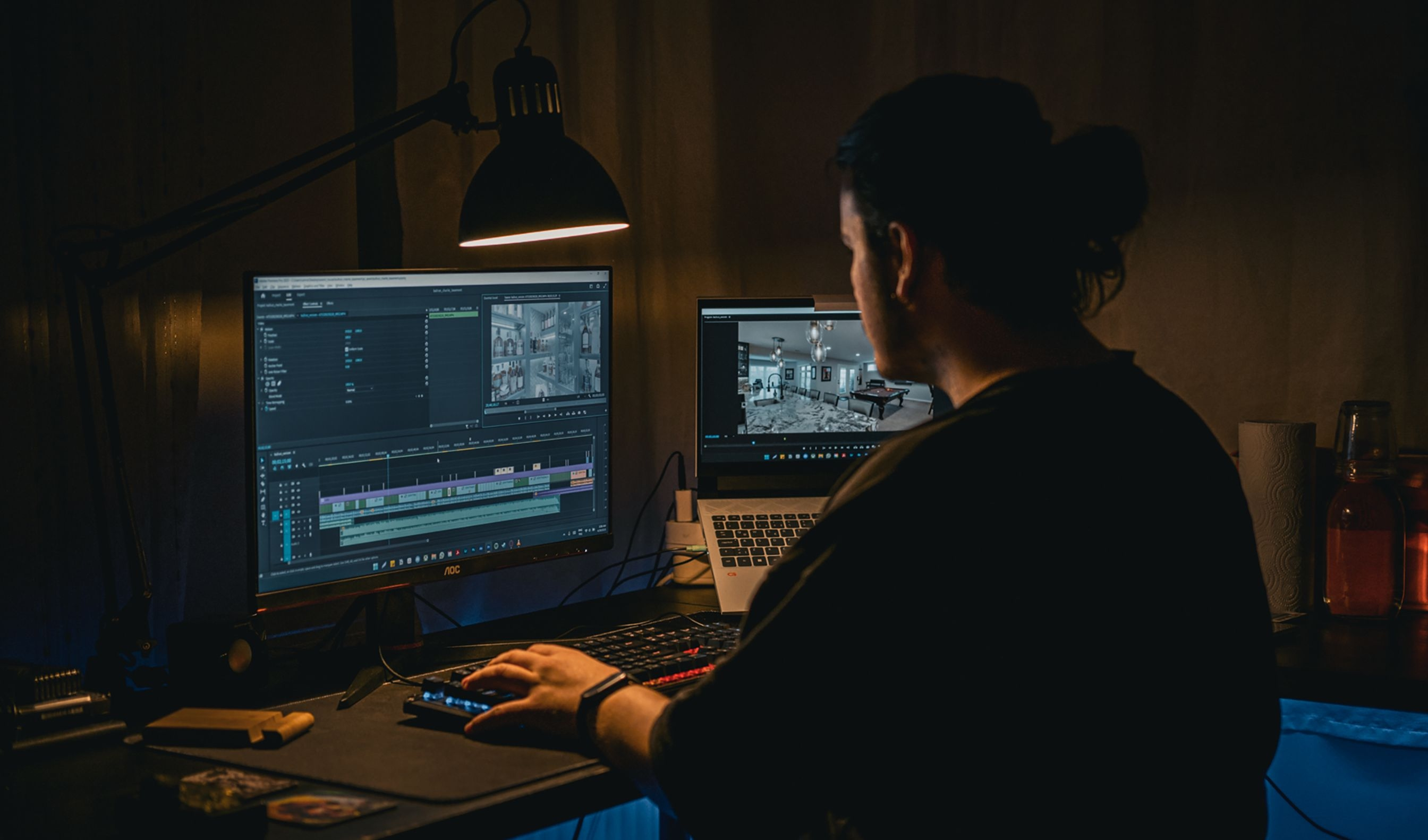
With plugins for all Adobe apps, the editors could access content wherever it was stored without leaving their favourite editing app. Plugins helped streamline the content production process and encouraged user adoption because they complemented how people actually worked, were highly functional, and very easy to use.
Proxy management workflows did the rest. Editors no longer had to submit manual transcode requests and wait to start work; they cut their edits on light, fast files that used a fraction of the bandwidth, then switched back to the full-resolution original only at export. That saved minutes to hours of prep on every job, and it meant machines that were never built to handle huge source files no longer had to.
Collections for review and controlled partner sharing:
Using Collections, review time was reduced by 30% because it enabled people to collaborate in real time with comments, reviews and approvals across formats, versions, teams and time zones. Whether it's an agency photographer adding the latest shoot at sea, an editor submitting a new draft of a promo for a wave season campaign, or a producer sending an approved interview to marketing for review, it all happens in the same Collection, at the same time. Everyone sees and acts on the same piece of content, securely and in real time.
That same Collection can also manage external partners. The marketing team built one Collection per external agency and set rules for exactly what each partner could see, download, or edit. Partners worked directly on the approved version, always within those guardrails, with no extra licenses, no admin requests, and no IT involved.
Evolphin X, Portals will extend this even further, driving distribution at scale. Where a Collection serves a team or an agency, a Portal can serve your entire partner network simultaneously. For trade marketing, hundreds or thousands of travel agents log into a controlled space - a website - and see only the approved content published for them, and pull what they need, co-branding it as their own within the parameters you set. Content is secure, version controlled, on brand and available only to the people with the appropriate access rights.
Benefits
Higher-quality output at lower cost
Centralized cloud storage cut infrastructure costs significantly, and self-service access meant creative teams could find and use the right content themselves, reducing reliance on IT enough that the team supporting it stayed smaller and leaner.
Faster turnaround, more output, happier creatives
Plugins and Collections cut campaign turnaround from a week to three days. The whole team adopted the platform within four months, marketing hit record campaign creation times within six months, and the organization reclaimed 2,400 creative hours in year 1.
Secure by design
Every asset carried managed rights, with expiry dates flagged automatically and administrators controlling exactly who could share, view, or edit. Single sign-on kept internal access limited to the right people, external partners got tightly scoped access to only what was shared with them, and every action was tracked and so working inside the system felt safe, not risky.
Results
The real win wasn't any single feature - it was closing the gap between where content lived, how people found it, where editors used it, and how everyone reviewed it. From a studio on shore to a crew at sea, the cruise line now runs one creative engine instead of a dozen disconnected ones.
And the foundation is built for what's next. With Evolphin X on the horizon- conversational AI search that works across asset types and interprets requests using context from your own media library, Portals for external distribution, and Bring Your Own Storage to eliminate migration costs and delays - the same operation is about to get faster, reach further, and cost much less to scale.
30%
faster review cycles
350 TB
of media indexed
2,400
Creative-team hours reclaimed
<6months
Onboarding complete
What this means for you
This was one cruise line, but the pattern isn't unique because these workflows and challenges are common across the industry. Capturing content is the easy part, it's post-production and distribution where the real problems truly hide.
That's the gap Evolphin closes:
One library. One search, across every storage location you have.
Your media inside the editing tools your team already uses; nothing new to learn.
Controlled, secure sharing with every agent and partner; no IT ticket required.
Deploy your way: full cloud or hybrid, with no forced migration.
Pay only for what you use. Modular by design and start where it hurts most, expand at your own pace.
Natural-language search across your whole library.
Bring your own storage, indexed in place, kept exactly where it is.
Distribution that scales to thousands of partners.
The same pattern shows up well beyond cruising: travel and tourism, media and entertainment, sports, and marketing agencies. If the hardest part of your operation is finding the right file and getting it where it needs to go, this is the layer that fixes it.
Share this case study
Media Asset Management, Now Autonomous
Ask Evolphin for footage the way you'd ask a colleague, let it tag and organize on ingest, and distribute to your entire partner network from one place. Talk to us and see what an AI-native creative operation looks like.
Thanks!
We've got your details and we'll be in touch.
Oops! Something went wrong while submitting the form.







.avif)


%20(1).avif)