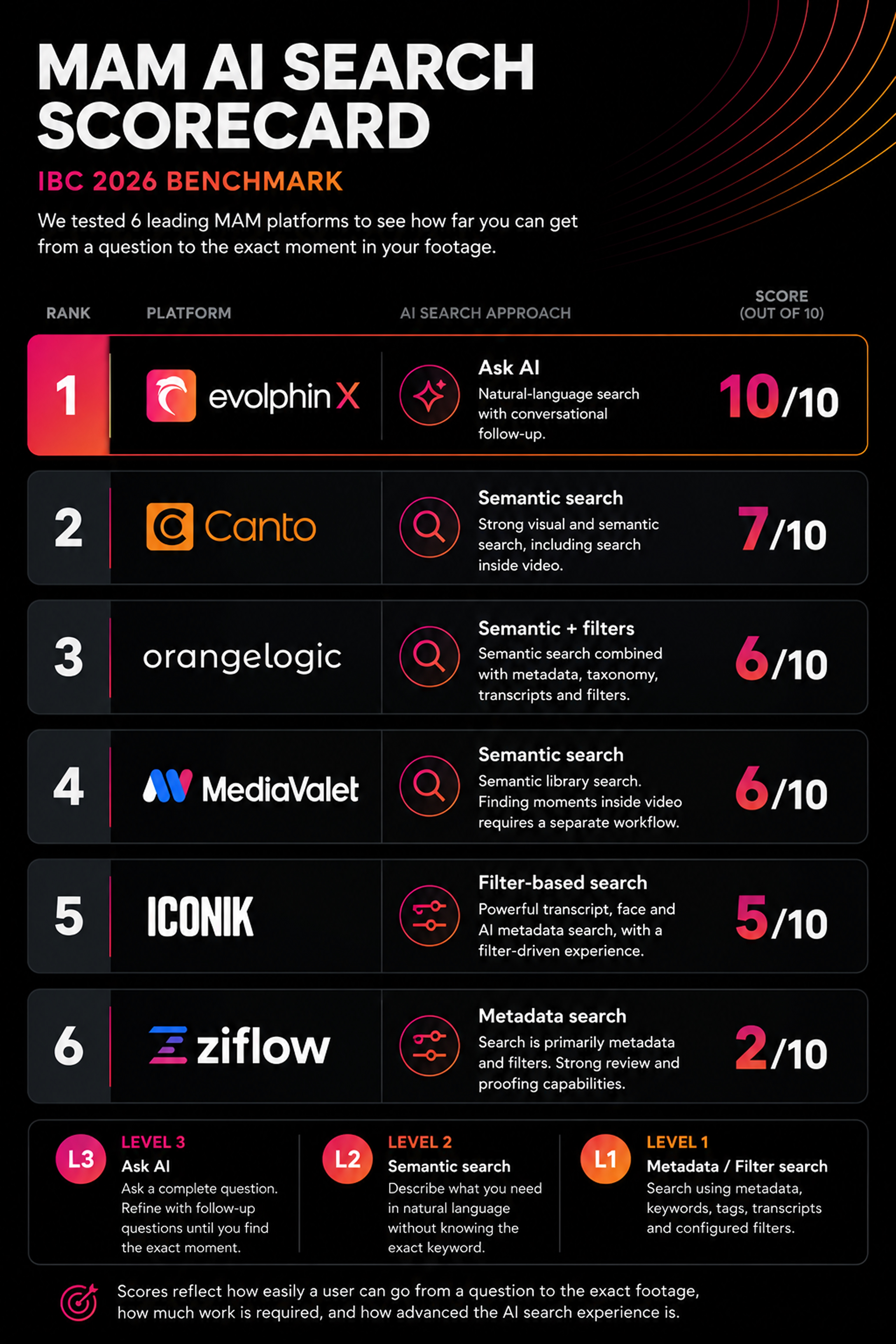
- All six platforms support keyword, metadata or filter-based search.
- Canto, Orange Logic and MediaValet move into semantic search, allowing users to describe what they want in more natural language.
- Iconik offers strong transcript, face-recognition and AI-metadata tools, but the workflow tested was still driven mainly by configured metadata and filters.
- Ziflow is strong at review and approval once a proof is open, but it is not designed as a full MAM discovery layer.
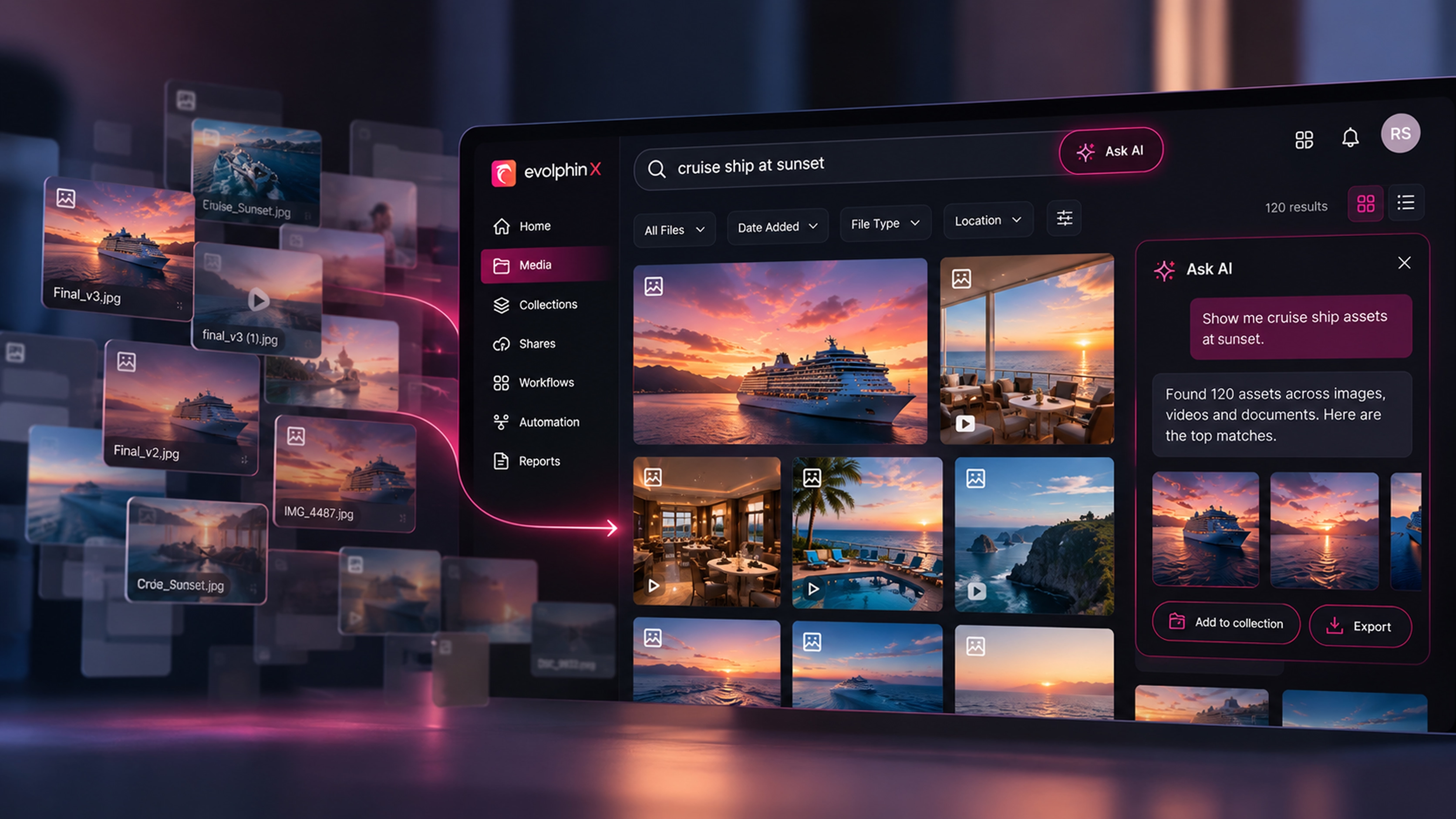
- In this benchmark, Evolphin X was the only platform that supported a complete conversational Ask AI workflow with follow-up refinement.
- The useful question is not whether a MAM has AI. It is how quickly a user can get from a normal question to the exact moment they need.
AI search is becoming a standard claim in media asset management. The phrase sounds clear, but the actual experience varies widely. In one platform, AI means richer tags and filters. In another, it means describing a scene in everyday language. In a third, it means asking a complete question, seeing relevant moments and narrowing the result with a follow-up.
Those are not small differences when a producer or editor is searching through thousands of files or hundreds of hours of footage. A useful media asset management system should help people find what is inside the video, not only the file name or folder where it was stored.
For this benchmark, we compared six platforms: Evolphin X, iconik, Canto, Orange Logic, Ziflow and MediaValet. We focused on one practical outcome: how easily can a user move from describing what they need to opening the right moment?
How we compared the platforms
We reviewed the search experience shown in each platform's product materials, help documentation and available demonstrations in September 2026. We then grouped the experience into three levels.
Level 1: Keyword and filter search
The user searches file names, metadata, transcripts, tags or configured filters. This is useful, but it usually depends on someone having already described the asset in the right way.
Level 2: Semantic search
The user describes what they want in natural language. The system can understand related words and visual meaning without requiring the exact keyword.
Level 3: Ask AI
The user asks a complete question, receives relevant results and continues with follow-up questions. The system keeps the context, so the user can narrow the same search rather than starting again.
We also looked at whether search could reach a moment inside video, whether results could be refined conversationally, whether AI required separate configuration or add-ons, and what the workflow might look like across a large library.
See how conversational video search works in Evolphin X
The AI search scorecard
The largest difference was not whether the platform used AI. It was how much work the user still had to do between asking a question and opening the exact footage
1. Evolphin X: conversational Ask AI
With Evolphin X, the search starts with a normal request rather than a file name, folder or tag. In the benchmark example, the user asks for intense moments from home matches. Evolphin X returns relevant media and suggests ways to narrow the request by moment, tournament or player.
The user can continue from there without restarting. That conversational continuity is what placed Evolphin X at Level 3 in this comparison. Traditional metadata and filters remain available when the user wants more control.
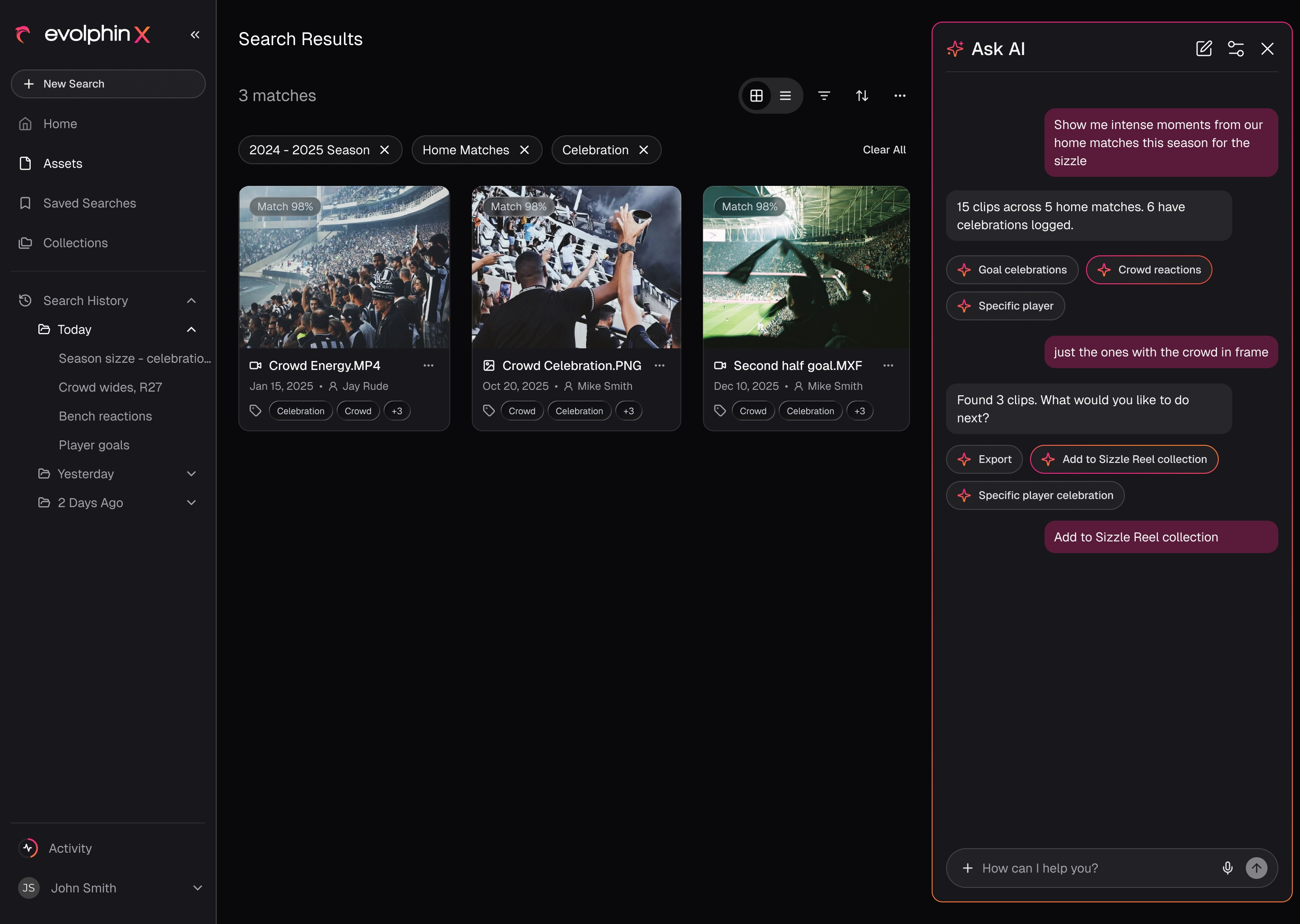
Benchmark result: Level 3 Ask AI. Score: 10/10.
2. Canto: strong semantic and visual search
Canto came closest to Evolphin X in this test. Its AI Visual Search accepts detailed natural-language descriptions and can combine visual information with metadata, facial-recognition data and available transcriptions. For video, it can surface matching clips and take the user to the relevant point.
The main difference was refinement. Canto's documented workflow asks the user to amend the prompt or adjust sorting and filters. We did not find the same context-retaining follow-up conversation shown in Evolphin X. AI Visual Search is also positioned as an add-on, so buyers should confirm cost and processing requirements at their scale.
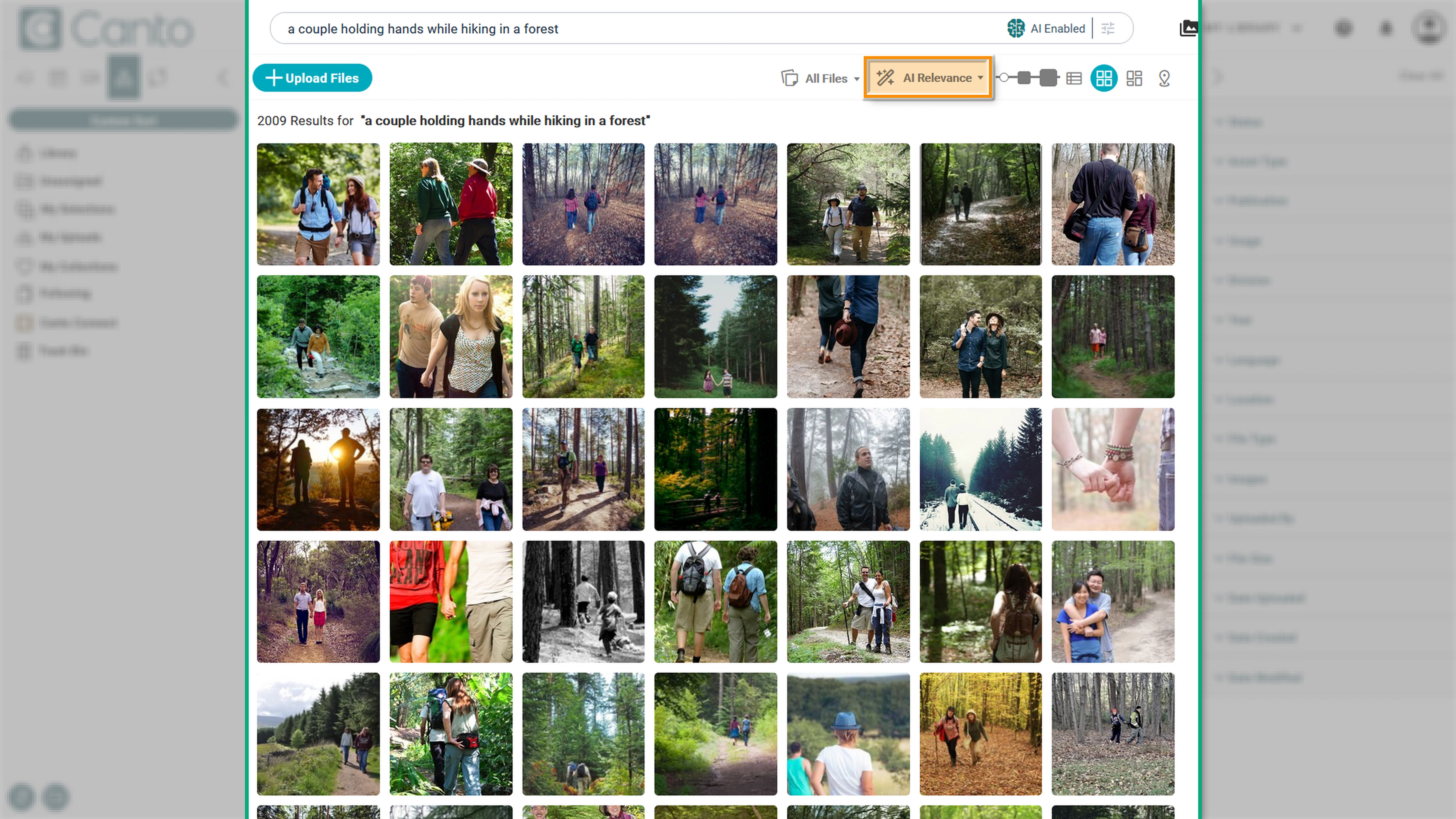
Benchmark result: Level 2 semantic search. Score: 7/10.
3. Orange Logic: powerful enterprise search
Orange Logic supports natural-language search alongside metadata, taxonomy, transcripts and filters. Its video tools can use captions and other AI-generated information to help users move to a matching moment.
That makes it a capable enterprise-search option. The experience we reviewed still depended more heavily on configured metadata, taxonomy and search controls, however. Orange Logic's published workflow did not show the same conversational follow-up journey used in this benchmark.
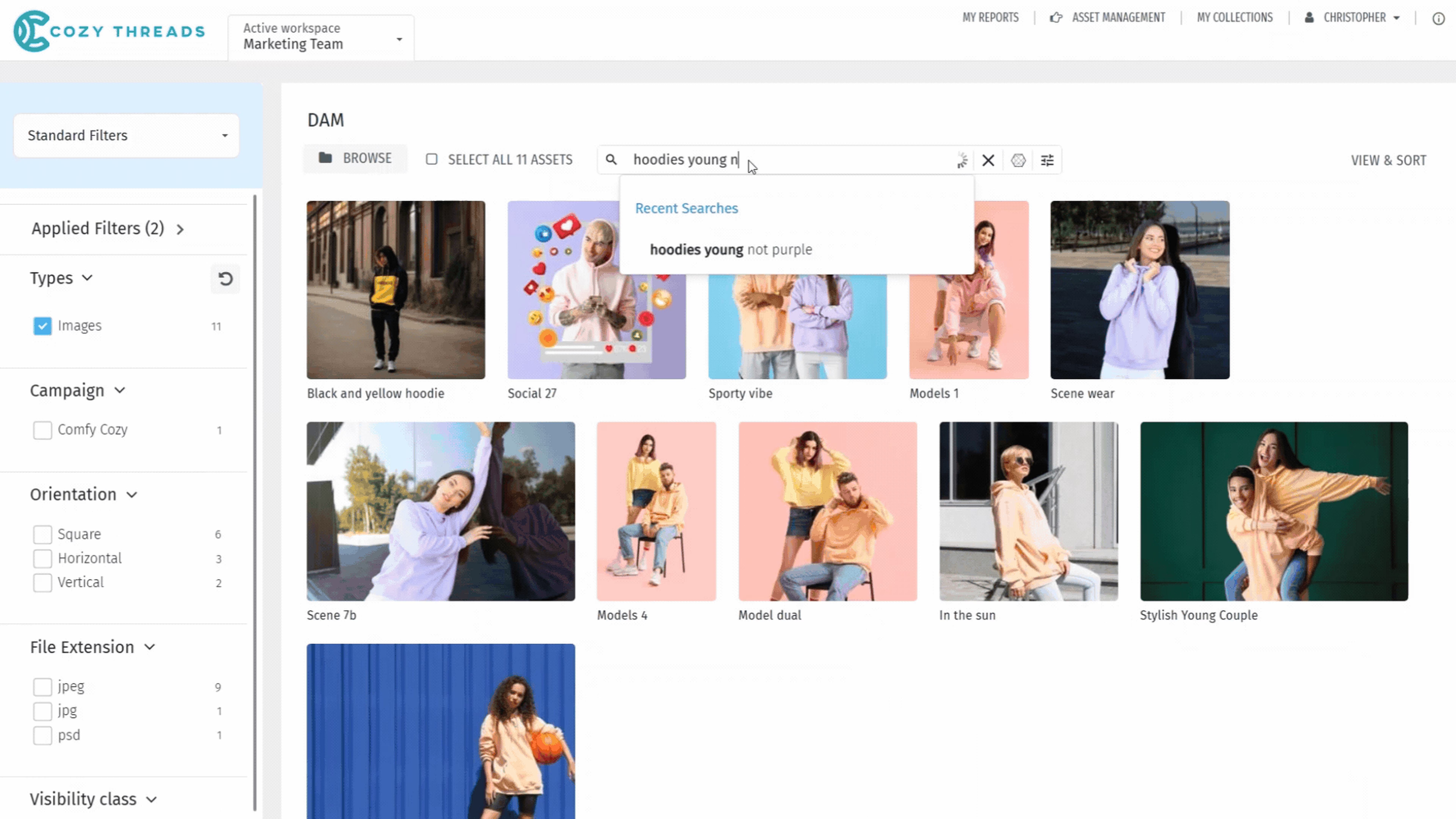
Benchmark result: Level 2 semantic search. Score: 6/10.
4. MediaValet: semantic library search plus video intelligence
MediaValet's Smart Search allows users to describe an asset in natural language. Its Audio and Video Intelligence tools can add transcripts, people, scenes, topics and other information to a selected asset.
The distinction is that library discovery and moment-level video inspection are separate steps in the workflow we reviewed. A user searches the library, opens an asset and then uses the intelligence view to inspect moments inside it. We also did not find a conversational follow-up experience that keeps the previous question in context.
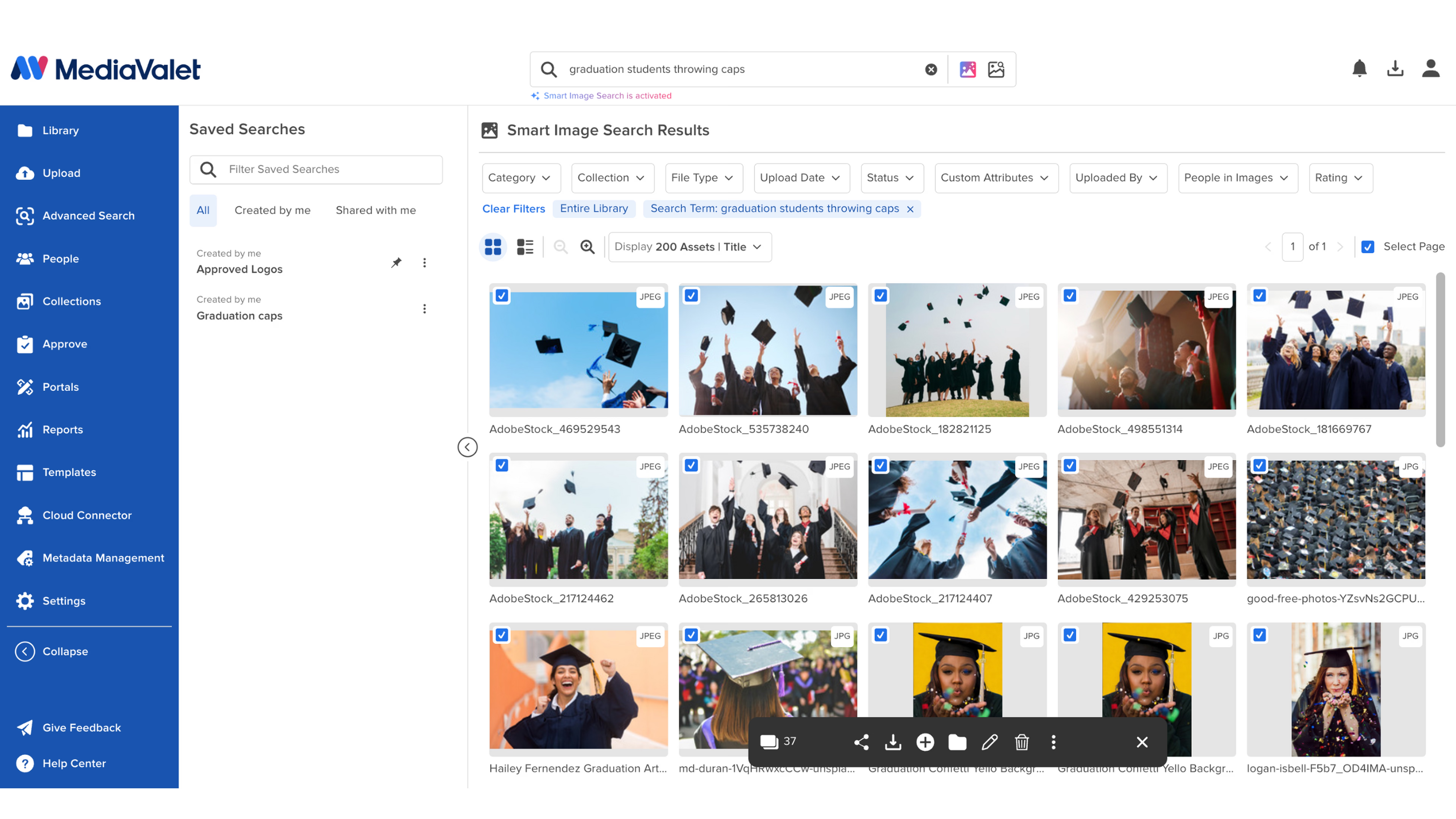
Benchmark result: Level 2 semantic search. Score: 6/10.
5. Iconik: strong media intelligence through search and filters
iconik can search spoken dialogue through time-coded transcripts, recognize people through a named catalog and add searchable information about objects and scenes. Clicking transcript text can take the user directly to the matching frame.
These are useful video-search capabilities. In the workflow tested, the user primarily combined transcript search, people filters and configured AI metadata rather than asking one complete question and refining it conversationally. That kept iconik at Level 1 for this specific benchmark, even though its media intelligence is stronger than a basic keyword search box.

Benchmark result: Level 1 metadata and filter search. Score: 5/10.
6. Ziflow: strong proofing, but a different search job
Ziflow is primarily a creative review and approval platform. Its global search can locate proofs using names, versions, reviewers, custom properties and other metadata. Once the proof is open, reviewers can navigate video by time, timecode or frame and leave comments on precise ranges.
That is useful when the team already knows which proof it needs. It is a different job from searching inside a large media library for a person, subject or scene. We did not find semantic or conversational library search for that discovery task in the workflow reviewed.
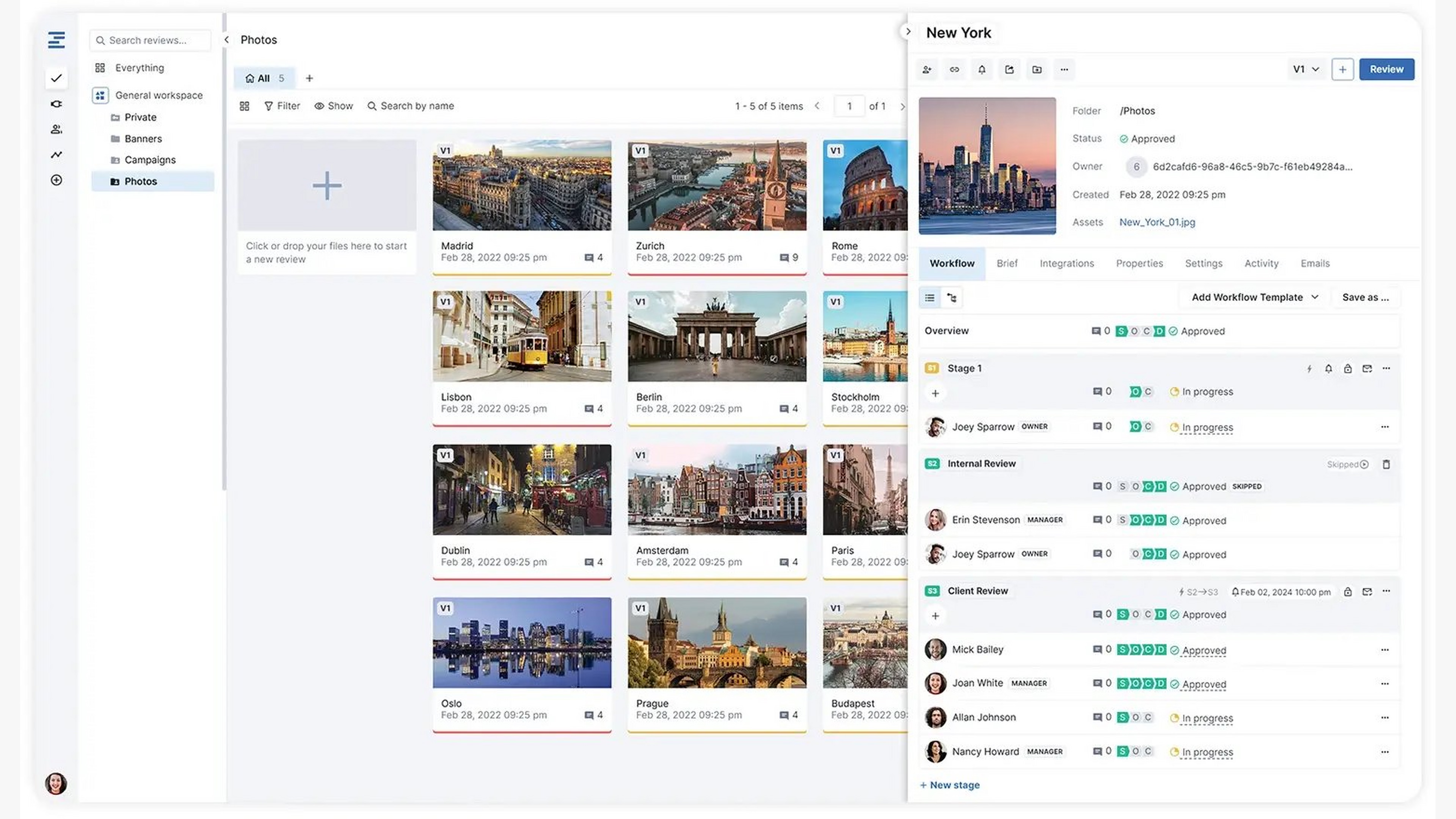
Benchmark result: Level 1 metadata and proof search. Score: 2/10.
Six questions to ask every MAM vendor
Do not ask only whether the platform has AI search. Ask the vendor to demonstrate the following with media that resembles your own library.
- Can it search inside the video? Or does it only search metadata attached to the file?
- Can I describe what I want in normal language? Test this without giving the exact filename, tag or keyword.
- Can search take me to the exact moment? A matching asset is not the same as a matching scene or spoken phrase.
- Can I ask a follow-up question? The system should refine the current search without making me repeat the whole request.
- What is included in the price? Ask whether transcription, visual recognition, indexing and AI search are standard or paid add-ons.
- What happens at our scale? Test representative video, library size, permissions and processing volume not a clean demo folder.
The takeaway
AI search is no longer a useful checkbox by itself. The better question is: how quickly can someone go from describing what they need to opening the exact footage?
Canto, Orange Logic and MediaValet all showed meaningful semantic-search capabilities. iconik offered strong transcript and media-intelligence tools through a more filter-driven workflow. Ziflow handled review and proofing well, but it was solving a different job. Evolphin X won this benchmark because it was the only platform in the comparison to reach a complete conversational Ask AI experience

.avif)