

A vendor who tells you AI will fix a decade of messy files is lying to you.
I say that as someone who builds AI into media asset management for a living. AI is a multiplier. Give it order and it multiplies order. Give it chaos and it multiplies chaos, faster and at greater cost.
Think of it like using AI to polish your financial statements when the underlying accounts are wrong. The report looks better, reads more convincingly, and is more dangerous, because now people believe it. Your media library works the same way. I’d rather tell you that before you buy rather than after.
Poor inputs, poor outputs
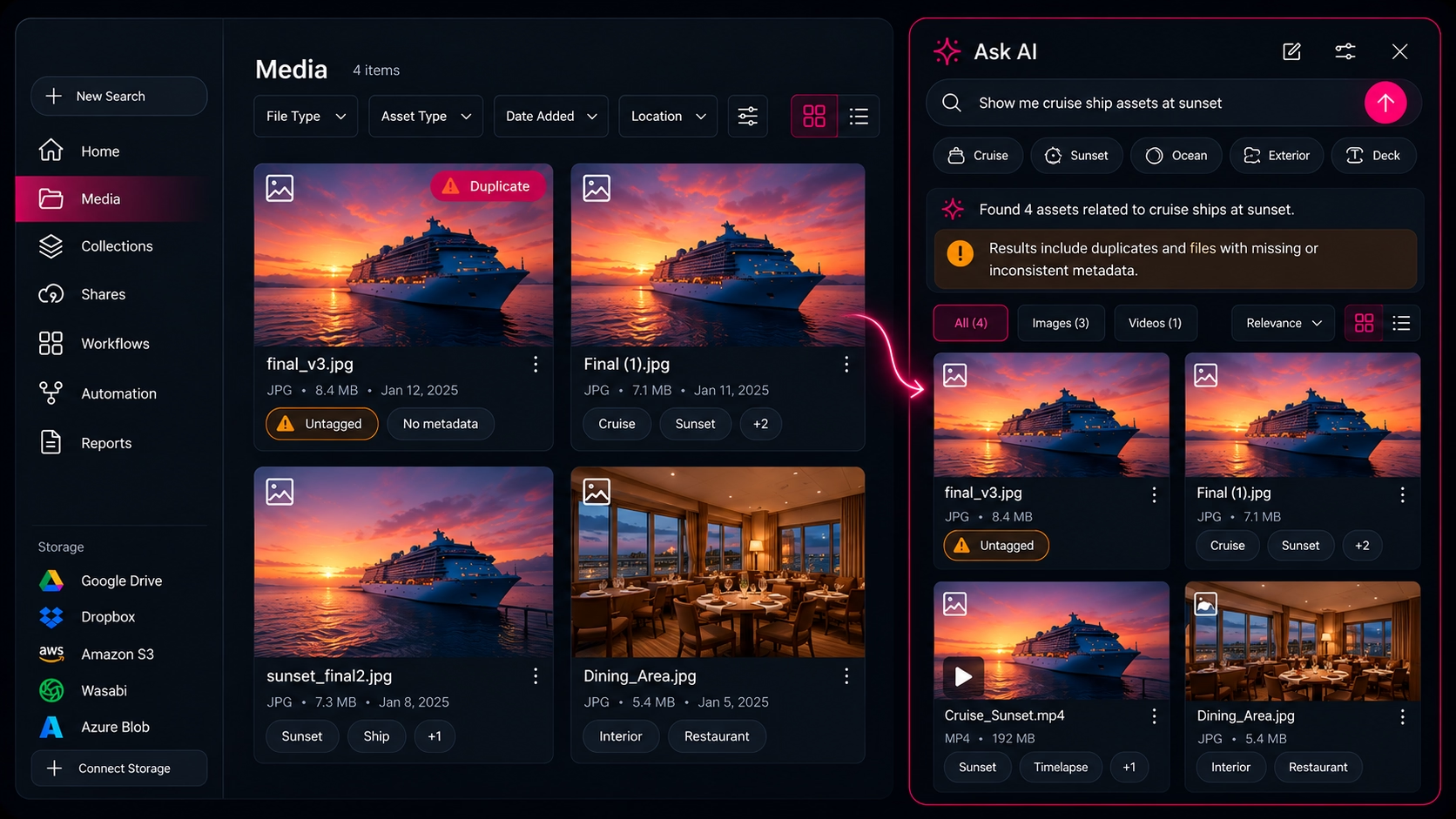
AI works from what’s already in your library: the files, their names, their metadata and how they’re organized. If four files are called final_v3, it can’t tell which one is the real final. It will confidently index all four, and your editors will find all four.
Poor metadata doesn’t get fixed by AI. It gets amplified, and it now looks intelligent while doing it. That’s worse than the mess you started with, because people trust it.
The numbers back this up. Gartner predicts that through 2026, organizations will abandon 60% of AI projects that aren’t supported by AI-ready data. Its survey found that 63% of organizations either don’t have, or aren’t sure they have, the right data management practices for AI.
Source: Gartner press release, “Lack of AI-Ready Data Puts AI Projects at Risk”, 26 February 2025.
Five signs you’re not ready yet
- Nobody agrees on names and they never did. The same shot, event or player is described three different ways, depending on who typed it.
- Your metadata is thin, inconsistent, non existent or wrong. A decade of free-text tags, entered by different people with different habits under different deadlines.
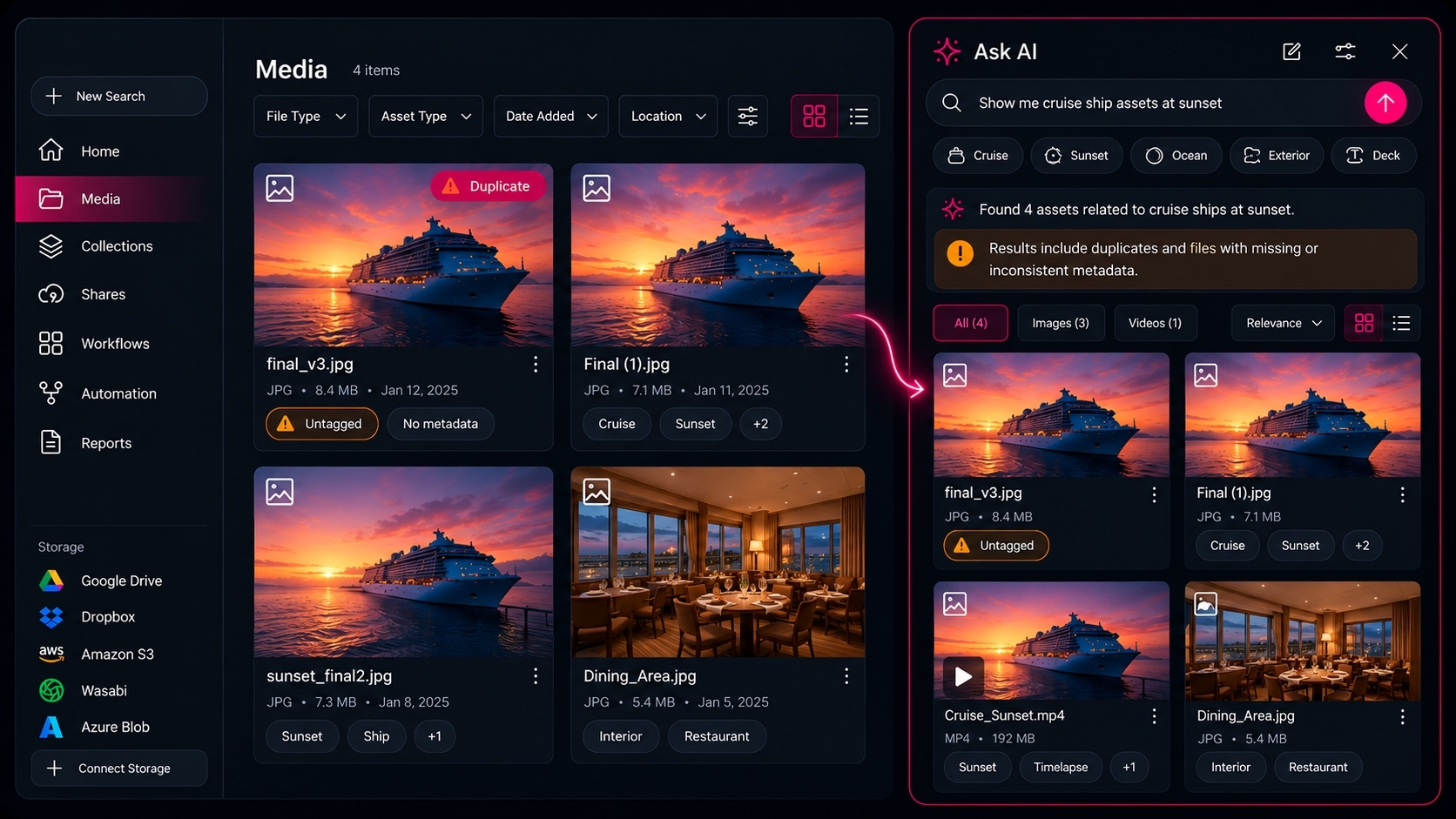
- Duplicates and versions are everywhere. Copies of copies, drafts sitting beside finals, and nobody certain which is which.
- Content lives in too many places. Drives, cloud buckets, desktops and archives, with no single inventory of what exists.
- Permissions are a mystery. Nobody can say with confidence who can see what, so an AI that surfaces everything will surface things people should never see.
Where AI genuinely helps
None of this means AI isn’t worth it. It’s very good at the work that piled up because nobody had time: recognizing what’s in video and images, tagging at scale, and filling the gaps people never got to. But it needs a foundation to build on, and part of the job is being honest about how solid yours is.
Three things nobody warns you about
The five signs above are the obvious ones. These three are the ones customers are surprised, and embarrassed, to discover after they’ve gone live.
- Findable is not the same as usable. AI makes everything easy to find, including assets you have no right to use such as expired licenses, missing talent releases, embargoed footage, material cleared for one campaign only. Before AI, a clumsy search was accidental protection. Now the wrong image surfaces in seconds, someone under deadline uses it, and the embarrassment is public.
- Nobody measured the baseline. Most customers track activity, such as assets tagged or hours indexed, not outcomes, such as searches that found the right asset first time. Twelve months in, someone asks what has changed, and there is no before picture to compare against. Worse, a confidently incorrect tag, like the wrong athlete or the wrong event, gets treated as fact once it’s in the library and then spreads into other systems.
- The index drifts from reality. Files are moved, renamed and deleted in storage every day, outside the MAM. If the index isn’t reconciled against what’s really there, search will return confident answers pointing at files that are gone or old versions that were replaced. After a couple of those, editors go back to hunting through folders, adoption collapses, and the ROI goes with it.
How to get ready
Take inventory. Know what you have, where it lives, how big it is and how fast new content arrives.
Test a slice and record the result. Pick a representative sample and run real searches on it. Note how often they find the right asset first time. That’s your baseline, and you’ll learn more in an afternoon than from any demo.
Agree a simple standard. A short list of naming and metadata rules that people will actually follow beats a perfect scheme nobody uses.
Clear the junk. Duplicates, dead files and irrelevant logs. Every file you index costs money, so don’t pay to index rubbish.
Sort out access and rights. Settle who can see what, and what you’re actually cleared to use, before AI makes it all findable.
Give the library an owner. One person accountable for its health, so the cleanup doesn’t decay the moment attention moves on.
You don’t have to fix everything first
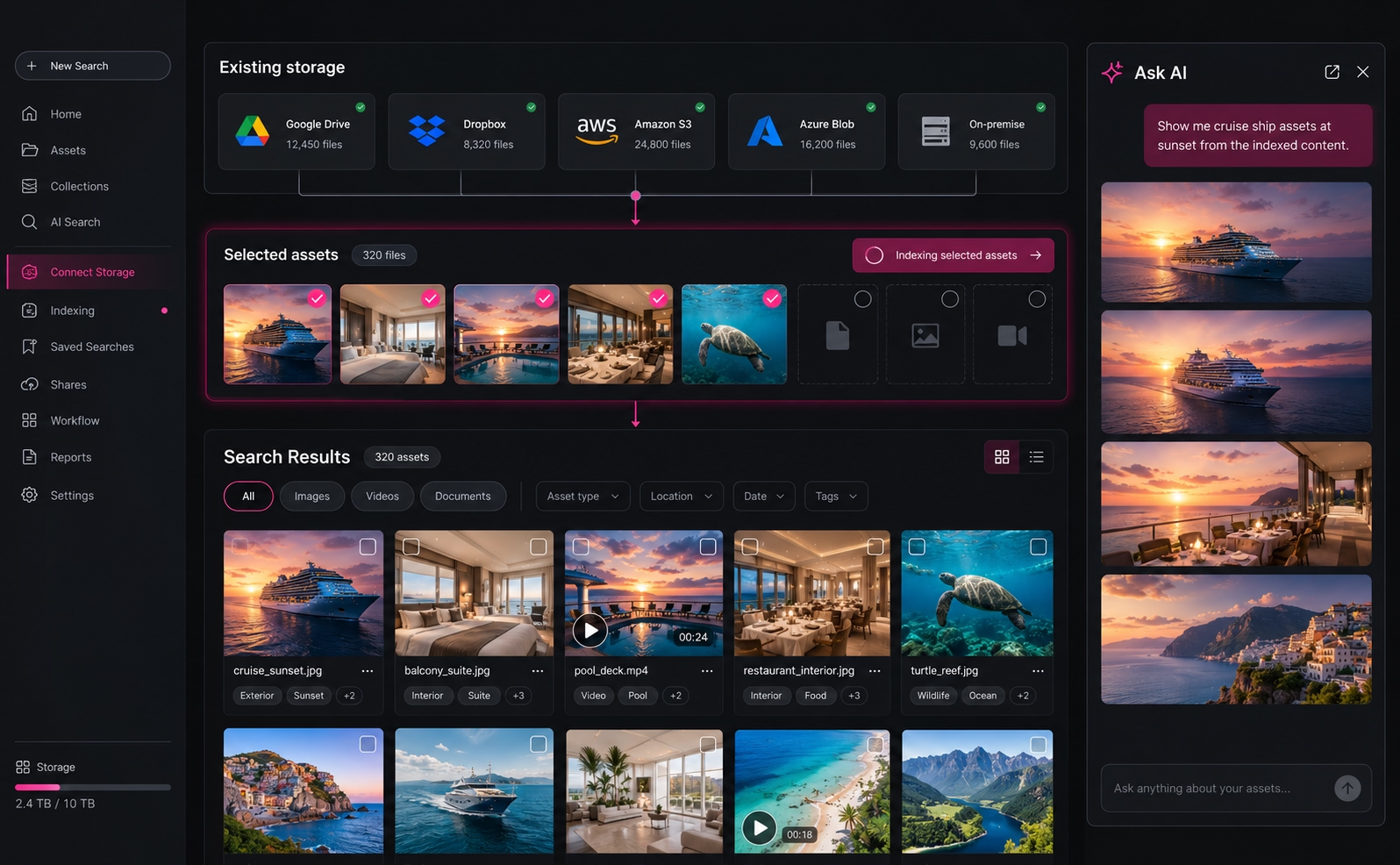
Waiting for a perfect library means waiting forever. With Evolphin X your content stays where it is, and we index it in place, so there’s no mass migration to get through before you begin. We keep watching your storage, so as files change, move or disappear, the index stays honest.
You also choose what gets indexed: by file, by file type or by any subset. Most solutions are all or nothing, and you pay for AI across everything either way. With Evolphin X you can start with the content that’s ready, prove the value, and expand as the rest is tidied up, paying for AI only where it earns its keep.
The aim isn’t a one-off cleanup. It’s a library that stays in order because the system keeps it that way, with AI taking on the tagging, filing and version-chasing so your people can spend their time on judgment and collaboration.
Bring us your real library
Send us a sample of your real media, mess included. We’ll tell you plainly what AI can recognize on its own, where metadata is still needed, and what to fix first. If the honest answer is “not yet”, we’ll say so.
That’s how I think trust should work. Email me at brian@evolphin.com.

.avif)