Remote and hybrid work stopped being a pandemic exception years ago. Gallup’s most recent data puts 52% of remote-capable U.S. employees on a hybrid schedule and 28% fully remote, as of mid-2025. Getting content into the cloud so a distributed team can reach it was the easy problem, and most MAM vendors solved it years back. The harder problem, the one that actually matters now, is whether governance travels with your team everywhere they work, including the phone in someone’s pocket at a shoot, a game, or a client site.
Distributed isn’t a phase anymore
For a lot of media teams, hybrid and virtual aren’t a transition state between “normal” and “back to the office.” They’re how the organization is built: a core team in one city, freelancers and field crews everywhere else, contributors who were never on one network to begin with. “Access” has to mean every device, every location, every contributor, under the same rules.
The part that’s easy, and the part that isn’t
Putting content in the cloud so people can reach it from anywhere isn’t the hard part anymore; every vendor in this category can do that. What’s hard, and what most of them skip, is making sure the same access controls, the same audit trail, and the same rights awareness apply no matter which door someone walked through: a laptop on the office network, a browser from a hotel room, or a phone that’s never touched your infrastructure at all.
What’s actually solving this today

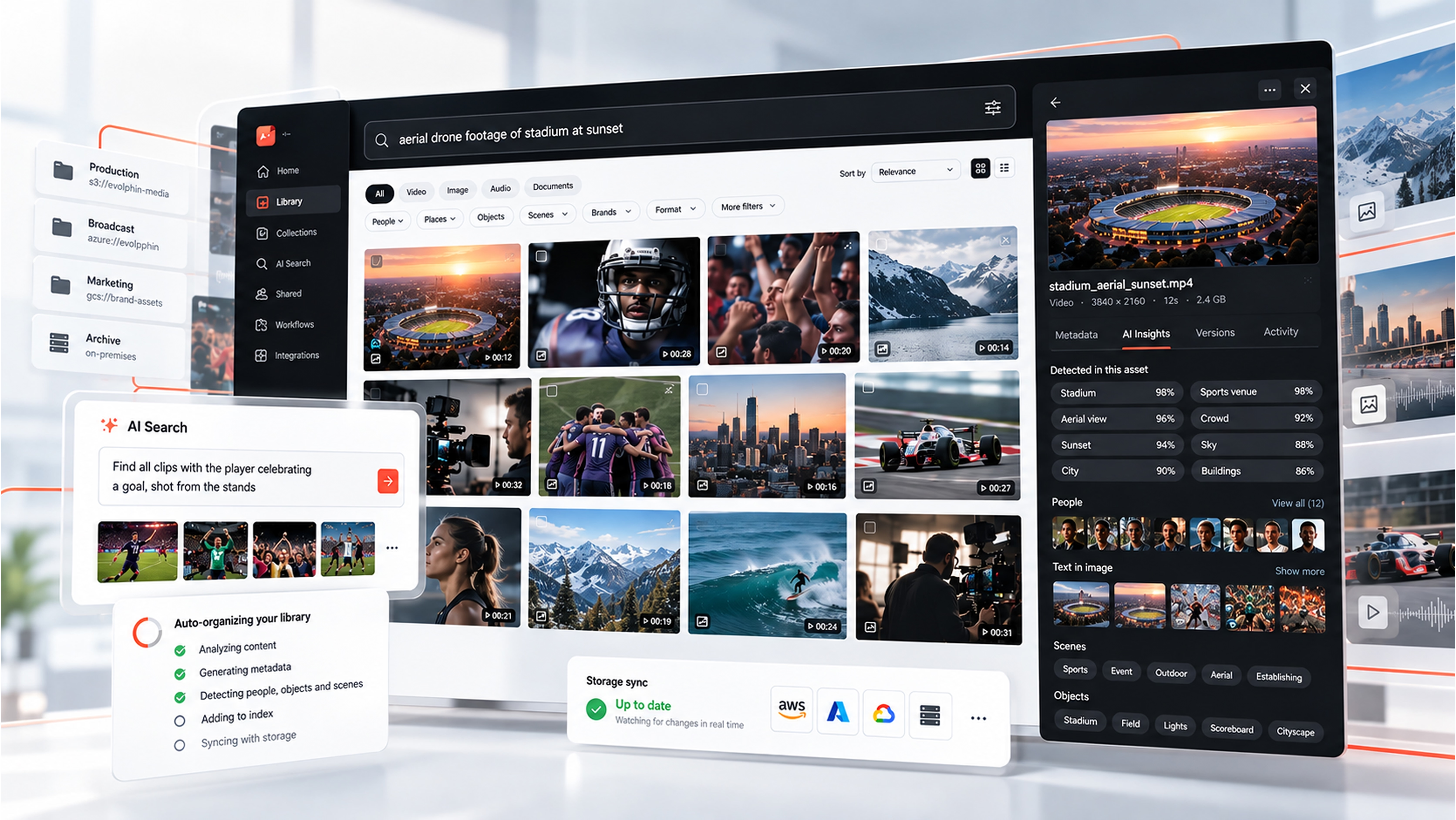
This is why Core is built around security and access control as a foundation, not a setting. The Collaboration module, live since October, carries that control to anyone outside your core team: domain-based access for an entire partner organization, expiration rules that close access on their own, and a delegated, audited trail for who did what. Index in Place means a distributed team doesn’t wait on a migration to get started, either. Content stays in the storage you already have, and Evolphin X keeps the index current as it changes, wherever it’s being added from.
Where we’re taking mobile
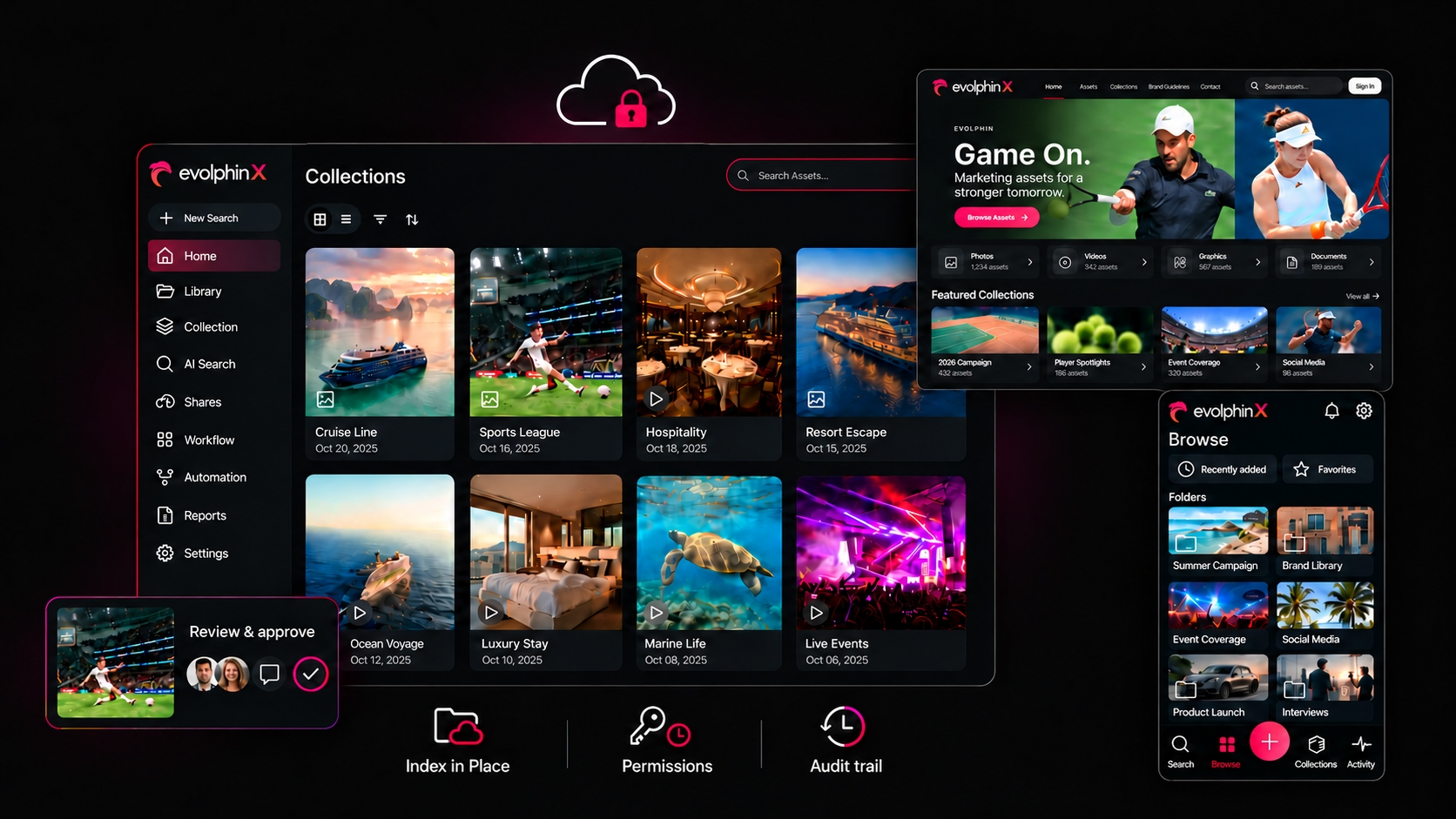
The next piece is the one your team will feel most directly: the phone itself. We’re building an Evolphin X mobile app, separate from the core product but governed exactly the same way, so field teams, brand managers, and approvers can search, preview, capture, upload, and approve media without waiting to get back to a desktop. The goal isn’t to shrink the desktop product onto a small screen. It’s to make the phone the fastest, safest way to move approved media in and out of the library from wherever work is happening, under the same permissions and the same audit trail as everywhere else. It’s in development, not shipped, and I’d rather say that plainly than let the pitch get ahead of the product.
Knowing what to do with a file, not just where it is

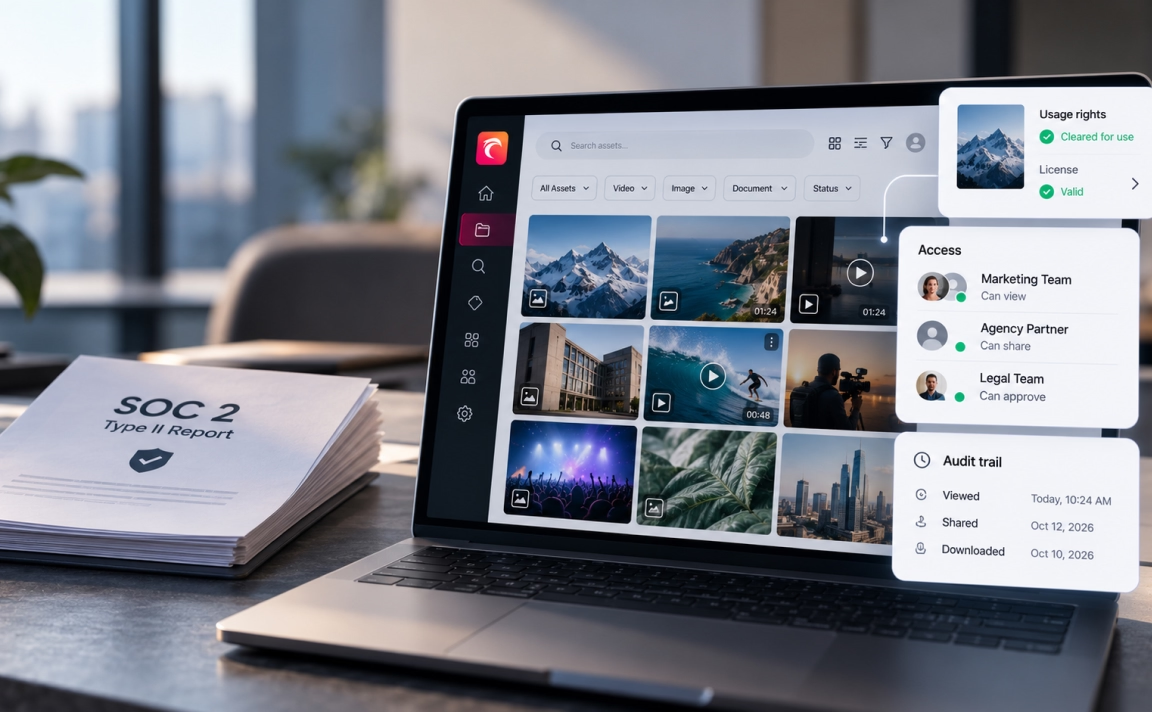
Capture is only the start. A photo taken on-site this afternoon still needs the right destination, the right metadata, and the right rights awareness before anyone else should use it, and today that still depends on someone remembering to apply it by hand, usually after the moment has passed. This is the same direction we’re taking Autonomous MAM across the rest of the library: recognizing what it’s just received and routing it correctly, flagging a rights or expiry condition before it becomes someone else’s problem, applying the same governance whether a file arrived from a desktop upload or a phone in the field. It’s where we’re headed over the next year, not something you can turn on today. Access permissions and content usage rights are different questions. Our guide to what SOC 2 does and doesn’t cover explains that distinction.
Governance doesn’t stop at the browser either
The same principle extends to where editors already work. We’re also building plug-in access into the creative tools your team has open, so an editor can search, pull, edit, and save a version back without leaving the app, under the same permissions as everywhere else. Also in development.
Where distribution goes next: portals
Internal collaboration is only half of “distributed.” The other half is everyone outside your organization, press, partners, clients, who still needs a governed way in. We’re building a Portals module for exactly that: a branded, searchable distribution page your team builds without a developer, backed by the same governance as everywhere else. Instead of one shared link anyone can forward, invite-based portals attribute every view and download to a person. Access runs through short-lived, revocable signed URLs rather than permanent direct links, with watermarking and licence terms set per asset, and every publish, invite, and download logged for audit. It’s also built to turn distribution into a revenue surface, not just a sharing layer, so a portal can sell access to approved content directly. In development, not live; I’ll say so again plainly when it ships.
What to check before trusting any MAM with a distributed team
- Does access travel with the device, or just the network? A VPN-only model quietly excludes anyone working from a phone or a borrowed laptop.
- Is there one audit trail, or a different one per access point? Fragmented logs are how a question like “who shared this” goes unanswered.
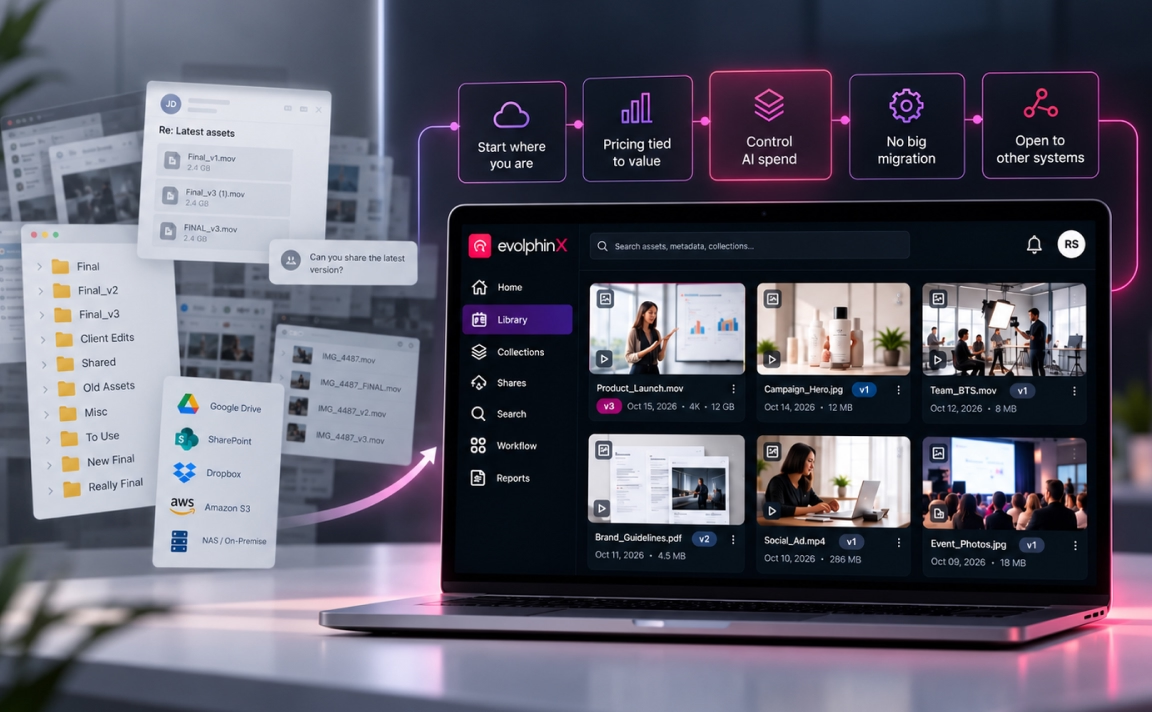
- Do you have to migrate content before a new office or contributor can use it? If onboarding means waiting on a migration, your distributed team is waiting too.
- What happens to a file the moment it’s captured, not after someone files it later? The gap between capture and governance is where rights problems hide.
- Which of this is live, and which is a roadmap promise? Ask for a date. A vendor who won’t give you one is telling you something.
Make these checks part of defining your MAM requirements, and ask each vendor to demonstrate them using your own content.

A few questions we get directly
Is the Evolphin X mobile app available now? Not yet. It’s in development; this article describes the direction, not a shipped feature.
Does cloud MAM mean migrating our content first? Not with Index in Place. Content stays in your existing storage, and the index stays current as it changes.
Does mobile access mean weaker security than the desktop? No. The mobile app is being built to carry the same permissions and audit trail as everywhere else, not a lighter version of them.
Tell us how distributed your team actually is
Explore Evolphin X media asset management for your distributed team.
If your team spans offices, freelancers, and field crews who were never on one network to begin with, tell us how that actually works day to day. We’ll tell you plainly what’s solved today and what’s still ahead of us.